
Google Opens Pakistan Office: What It Means for Jobs, AI and the $30 Billion IT Economy
2026-08-19
Explained: Google’s Pakistan Office Opens : What It Means for the Country, Jobs and the $30 Billion IT Ambition
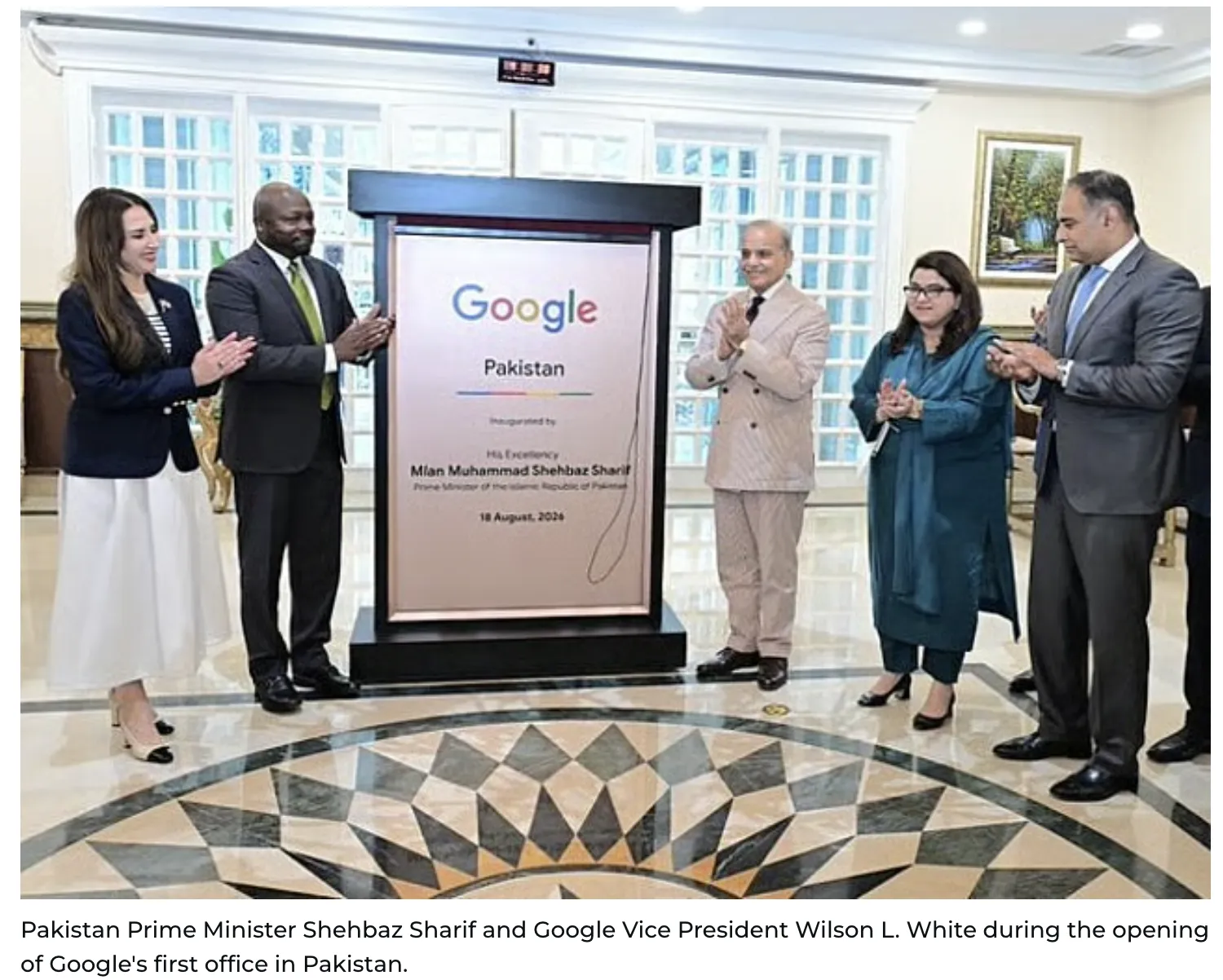
Google’s decision to establish a formal presence in Pakistan is more significant than the opening of another multinational office. The company has already been deeply embedded in Pakistan through Search, YouTube, Android, Google Ads, Google Cloud and its developer and education programmes for years. What is changing now is the depth of that relationship.
The timing is particularly important. Pakistan is trying to transform its technology industry into a major source of exports, foreign exchange and employment, with the government targeting $30 billion in IT exports over the coming years. At the same time, Google is expanding its focus from search and advertising into cloud computing, artificial intelligence and productivity software. Pakistan's young population, growing digital workforce and expanding startup and freelancing ecosystem therefore fit directly into Google's next phase of growth.
The headline number illustrates the scale of Google's existing influence. Google-backed research estimated that its products and services supported more than 960,000 jobs in Pakistan in 2023. That included approximately 864,600 jobs associated with businesses using Google Search, Google Ads, AdSense, Google Cloud and YouTube, plus another 100,400 jobs connected to the Android app economy. Reported by Associated Press of Pakistan
That number should not be interpreted as Google directly employing 960,000 people. It represents the wider economic activity enabled by Google's ecosystem. A Pakistani business that acquires customers through Google Search, a freelancer who finds international clients through online platforms, a developer earning from an Android application or a YouTube creator employing editors can all be part of that economic impact.
And that distinction is actually what makes Google's Pakistan strategy interesting.
Why Is Google Establishing a Presence Now?
Google has been working in Pakistan for more than a decade, so the obvious question is why it has taken this long to establish a more formal local presence.
The answer is that a company such as Google does not need a physical office simply to serve consumers. Search, YouTube, Android and advertising can reach millions of people without a large local organisation. Establishing a physical presence becomes more valuable when the opportunity extends beyond consumers to governments, enterprises, developers, education, cloud infrastructure, AI adoption and local partnerships.
Pakistan is increasingly reaching that stage.
The country's IT and ICT exports reportedly reached $4.6 billion in FY2025–26, up from $3.8 billion the previous year, while freelancer remittances reached approximately $1.76 billion. (Report IBA CBER) The government is now trying to build on that growth and ultimately reach a $30 billion technology-export economy.
For Google, that creates a market that is potentially much larger than advertising revenue from Pakistani consumers. A growing technology-export industry means more companies building websites, applications and AI products; more businesses purchasing cloud infrastructure; more developers using Google's tools; and more enterprises adopting Workspace and Gemini.
In other words, Google is not simply looking at Pakistan as a market of consumers. It can increasingly look at Pakistan as a market of developers, businesses, creators and exporters.
That is a much more valuable proposition.
The 960,000 Jobs Figure Is Bigger Than It First Appears
Google's reported economic impact also shows how technology companies can influence an economy without becoming major direct employers.
In 2023, Google said its AI-powered products and services generated approximately $3.9 trillion equivalent in economic benefits for Pakistani businesses and households when measured using the local currency figures reported at the time. Of that, Google Search, Ads, AdSense, Play, Cloud and YouTube were estimated to have supported $2.6 trillion equivalent in business activity, while consumer products such as Search, Maps, Play, Drive and YouTube contributed another $1.3 trillion equivalent in household benefits.
The particularly interesting number is that approximately $249 billion equivalent of the business activity attributed to Google's ecosystem came from overseas markets.
That suggests the opportunity is not limited to Pakistan's domestic economy.
A Pakistani software developer can work for a foreign customer. A YouTube channel can generate revenue from viewers in the United States, Europe or the Gulf. A local software company can use Google Cloud to serve international customers. A startup can build an AI application using Google's infrastructure and sell it globally.
This is precisely the type of economic activity Pakistan wants to encourage because it brings foreign revenue into the country without requiring traditional exports such as textiles, machinery or agricultural products.
Why Gemini and Students Matter
Google's decision to provide eligible Pakistani university students with a free one-year Google AI Pro subscription is strategically significant for the same reason. The programme gives students access to Gemini's advanced AI capabilities and related tools for research, writing, productivity and creativity. Google announced the Pakistan student offer in 2025 as part of a broader Asia-Pacific initiative.

At first glance, this looks like an education initiative. It is certainly that, but it is also a long-term ecosystem strategy.
Students who learn to use Gemini, Google Workspace, NotebookLM and other Google tools today could become the developers, entrepreneurs, consultants and corporate employees using those products professionally five or ten years from now. Google is effectively introducing its AI ecosystem at the point when a large part of Pakistan's future workforce is being trained.
That matters because the competition in AI will not simply be about which company has the best model. It will also be about which AI platform becomes embedded in the daily workflow of millions of people and thousands of businesses.
Pakistan's demographics make that particularly interesting. The country has a large young workforce entering the economy at precisely the moment AI is reshaping software development, marketing, research, customer service and other knowledge-based jobs.
Where Does Google Expect the Revenue to Come From?
There is no reliable public disclosure that allows anyone to say Google expects a specific amount of revenue from Pakistan following the office opening. Google reports its financial performance at a much broader geographic and business-segment level, so assigning a precise future Pakistan revenue figure would be speculation.
The underlying opportunities, however, are fairly clear.
Advertising remains the most obvious one. As Pakistani businesses move more of their customer acquisition online, Google can capture a greater share of their advertising expenditure through Search, YouTube and Google Ads.
Cloud and enterprise software could become even more important over time. A growing technology industry requires infrastructure, data storage, cybersecurity, analytics and AI computing. Google Cloud can potentially sell those services not only to Pakistani companies but to businesses building products for international markets.
Then there is AI. Gemini gives Google another way to monetise both individuals and enterprises, while Google's AI models and cloud infrastructure can become part of the technology stack used by Pakistani startups and software exporters.
The long-term opportunity is therefore potentially much larger than Pakistan's domestic advertising market.
If Pakistan succeeds in building a $10 billion, $20 billion or eventually $30 billion technology-export economy, global infrastructure providers such as Google could capture value from that expansion without needing to capture the entire market.
Also Read: CRED vs MobiKwik vs Paytm (2026): Which App Is Best for Credit Cards, Cashback & Loans?
What Could This Mean for Pakistan?
The best-case scenario is that Google's presence encourages other multinational technology companies to deepen their involvement in Pakistan.
Microsoft, Amazon, Meta, TikTok and other technology companies could eventually see greater value in local enterprise sales, cloud infrastructure, digital advertising, developer programmes and partnerships as Pakistan's technology economy expands.
But the office itself will not create a $30 billion technology industry.
Pakistan still needs reliable electricity and internet infrastructure, stronger digital education, predictable regulation, investment, access to international payment systems and an environment in which technology companies can operate with confidence. Google itself has highlighted the importance of narrowing Pakistan's digital skills gap, with its research suggesting that improved digital skills and education technology could add substantially to GDP by 2030. ()
There is also an important distinction between a local Google presence and a major Google engineering hub. The significance of the new office should therefore not be exaggerated into an assumption that Pakistan is suddenly becoming Google's next major global R&D centre. The larger opportunity at this stage appears to be around government and industry engagement, skills, education, enterprise adoption, digital exports and the broader technology ecosystem.
That does not make the development insignificant. It makes it more strategic.
Google's Pakistan Bet Is Really About the Next Generation of the Internet
The most important part of Google's Pakistan strategy may ultimately have little to do with the physical office.
Google began as a search company, became the dominant digital advertising platform, expanded through Android and YouTube, built a global cloud business and is now competing to become one of the foundational AI platforms. Pakistan happens to sit at the intersection of all those businesses: a large young population creates users, a growing digital economy creates advertisers, developers create applications, freelancers and software companies create export revenue, and universities create the next generation of AI users.
The office therefore represents a deeper relationship with an ecosystem that Google has already been building for more than a decade.
For Pakistan, the real opportunity is to move from being primarily a consumer of global technology to a producer and exporter of technology. For Google, the opportunity is to participate in that transformation while embedding its advertising, cloud, Android and AI products deeper into the country's economy.
If Pakistan can turn its young workforce, growing IT exports and expanding AI adoption into a sustainable technology industry, Google's arrival could eventually look less like a late entry into the market and more like an early investment in the country's next economic chapter.
By Tommy Thounaojam- Editor MicroMunch

Stay updated with our latest news and articles. Join our newsletter!
Trending Now
No trending posts found.
Related Articles
Debug: Tags used: Google Pakistan, Google Pakistan office, Google opens Pakistan office, Pakistan IT industry, Pakistan technology sector, Pakistan IT exports, $30 billion IT exports, Google Gemini Pakistan, Google AI Pakistan, Google jobs Pakistan, Google investment Pakis