Orbiting Intelligence: SpaceX Acquiring XAI The Solar-Powered AI Revolution
2026-02-04
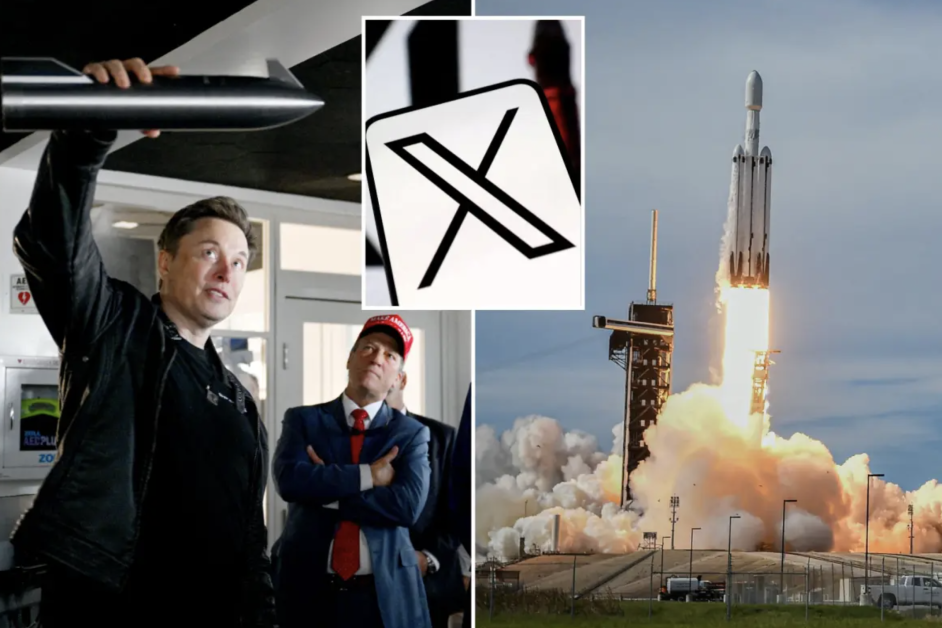
On February 2, 2026, Elon Musk’s SpaceX officially acquired his artificial intelligence startup xAI, merging AI software expertise with space infrastructure. The SpaceX and XAI merger is a landmark move, reshaping the future of computing and infrastructure, with the know-how to pioneer orbital data centers for artificial intelligence computation.
The New Era of Tech Investment: SpaceAI Boom
This SpaceX acquisition creates a vertically integrated tech powerhouse valued at roughly $1.25 trillion. It is designed to support an ambitious plan to build space-based data centers that harness near-constant solar energy, addressing the exponential power demands of next-generation AI systems.

Analysts see this as a move to challenge terrestrial data center limitations and reshape global AI infrastructure markets. The consolidated company brings together SpaceX launch, xAI’s AI models and talent, and related digital platforms under one roof, an unusual blend of aerospace, software, and data services.
The Origin of Innovation: How xAI and SpaceX Began
Every innovation begins with an idea, and so is the story of these companies mentioned, SpaceX and xAI, are both founded by Elon Musk in 2002 and 2023, respectively.
While xAI is an artificial intelligence company, focused on building advanced AI systems that aim to understand the universe and compete with leading AI labs. It developed large language models and AI tools, including the Grok chatbot, and emphasises scientific discovery and large-scale computing.
On the other hand, SpaceX, founded in 2002, is a private aerospace manufacturer and space transportation company. It revolutionised the industry with reusable rockets like Falcon 9 and Starship, and operates Starlink, a global satellite internet network, positioning itself at the centre of commercial space innovation and infrastructure development. Currently, is SpaceX profitable as it generates substantial revenue from launch services and Starlink, reportedly posting about $8 billion profit on $15–16 billion revenue in 2025. While private, its strong cash flow and Starlink growth support ongoing investment in new ventures.
Decisively Elon Musk chose to bring xAI under SpaceX to unify his AI and space ambitions into a single vertically integrated technology platform, combining rockets, satellites, and advanced artificial intelligence.
XAI joins SpaceX: How This Space Equation Works
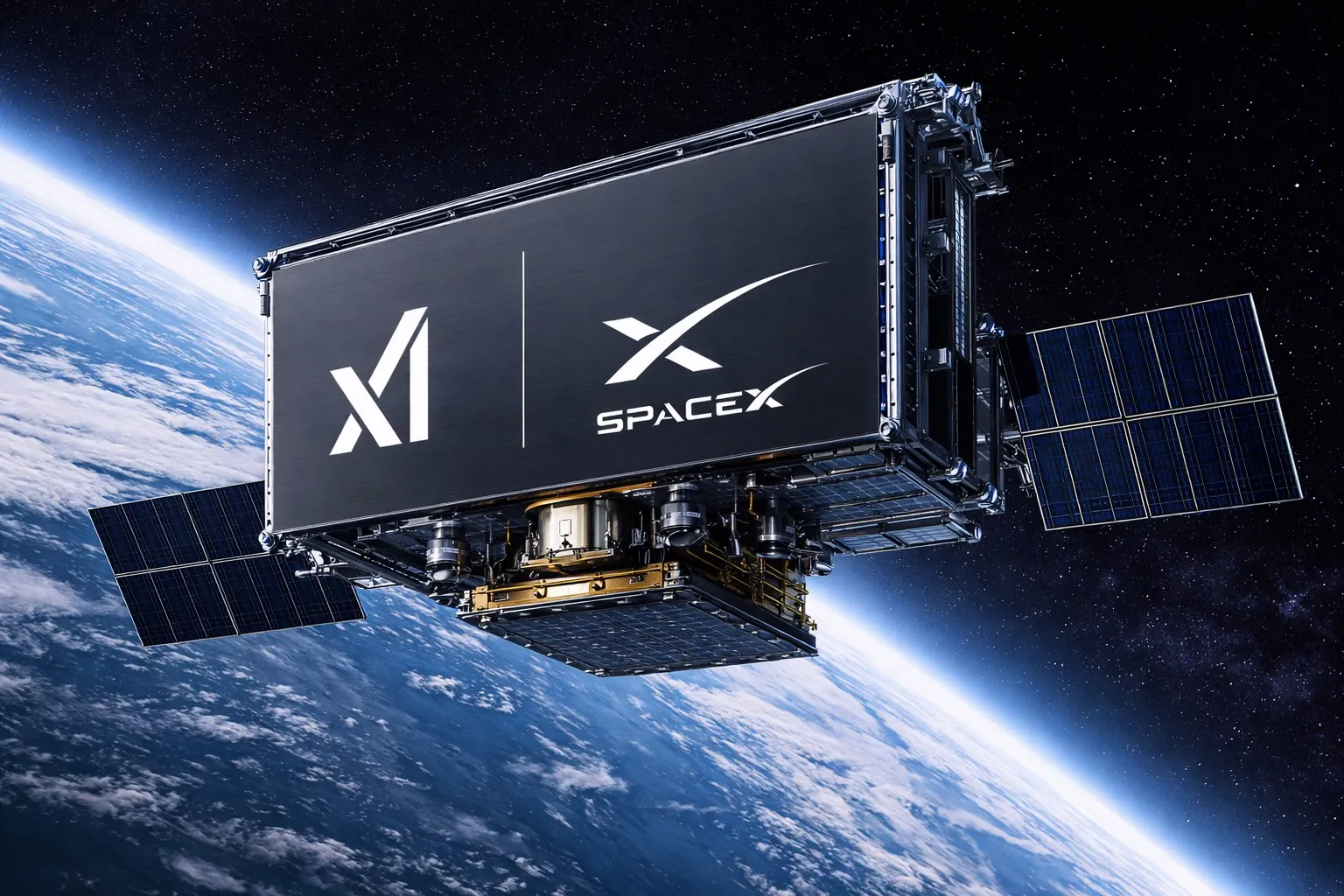
In the business world, every decision has a conclusive outcome; the same is with the SpaceX acquisition. The core rationale for SpaceX buying xAI lies in the collision of two powerful trends:
Accelerating AI Growth
Artificial intelligence workloads, especially training large models, require massive computing power and energy. Traditional on-Earth data centers consume huge amounts of electricity and cooling resources, driving costs up and stressing grids.
Space as the New Computing Frontier
Elon Musk, SpaceX’s vision is to replace Earth-bound infrastructure with space-based AI data centers, with primarily based on solar-powered satellites that operate continuously in sunlight, which requires minimal cooling needs. This could cut long-term computing costs and environmental impact.
The proposed orbital system, potentially up to one million satellites, would act as a mesh of AI compute nodes, connected through high-speed links and supported by SpaceX’s Starlink network. These satellites would be launched mainly via SpaceX's Starship, leveraging rapid reusable launch capabilities.
SpaceX And AI Business Expansion
A key competitive edge of this strategy is solar energy in space, with virtually uninterrupted sunlight far above Earth’s day/night cycle. As the plan depends crucially on leveraging solar energy in orbit, and the orbiting satellites can harvest and convert solar power into energy for high-performance processors, reducing:
Dependence on costly terrestrial electricity
Carbon footprint of computing
Thermal management complexity (space is naturally cold)
From a business perspective, this transforms SpaceX into not just a rocket/launch company but a renewable energy-backed AI compute provider, potentially rivaling terrestrial cloud giants like AWS, Google Cloud, and Microsoft Azure in scale. The integration of AI with space technology creates a vertically integrated technology platform:
AI research, model training, and deployment are centralized with xAI’s expertise.
Launch infrastructure and satellite manufacturing are handled by SpaceX’s Starship and Starlink programs.
Solar energy harvesting becomes a fundamental revenue driver by powering orbital data centers with minimal operating costs.
This is a strategic shift:
Instead of competing with terrestrial power grids, SpaceX can tap an infinite solar resource, reducing long-term energy costs and operational complexity.
With a proposed constellation of up to one million satellites functioning as orbital data centers, the potential for hundreds of gigawatts to terawatts of AI compute capacity annually is on the table.
For investors,
This SpaceX acquisition represents a transformative infrastructure play similar to how early internet backbone projects became foundational to today’s digital economy.
Solar-powered, space-based computing could serve global corporations, governments, and AI developers with ultra-scalable processing power.
This convergence could position SpaceX not only as a leader in aerospace but also as a dominant global compute provider for AI, challenging incumbent cloud data center operators and tech giants.
People Are Curious About:
What is XAI's stock price when it was acquired, and what is its current stock price?
Ans) Because xAI is a private company, it doesn’t have a public stock price like Tesla or Meta. Before the acquisition, xAI was privately valued at about $230–$250 billion based on funding rounds and insider valuations. As part of the merger with SpaceX, xAI shares are being converted into SpaceX shares under an exchange ratio instead of trading on public markets. The actual public “stock price” doesn’t yet exist.
What is the SpaceX stock valuation after the acquisition?
Ans) Following SpaceX’s acquisition of xAI, the combined entity is valued at roughly $1.25 trillion, with SpaceX itself estimated at around $1 trillion and xAI at roughly $250 billion. The merged company is expected to price its shares at approximately $527 per share ahead of its planned SpaceX IPO in 2026, potentially raising significant capital and establishing a public market valuation above $1 trillion.
What major changes does business see when XAI joins SpaceX?
Ans) The merger is expected to transform SpaceX from a primarily aerospace and launch services firm into a vertically integrated AI+space technology powerhouse. Combining xAI’s AI research and models with SpaceX’s Starlink satellite network and launch infrastructure may accelerate space-based data centers, reduce compute costs, and open new revenue streams. This convergence also enhances SpaceX’s competitiveness against terrestrial cloud and AI rivals like Google and Amazon.
The Financial Blueprint of SpaceX’s AI Leap: Funding, IPO Plans & Valuation
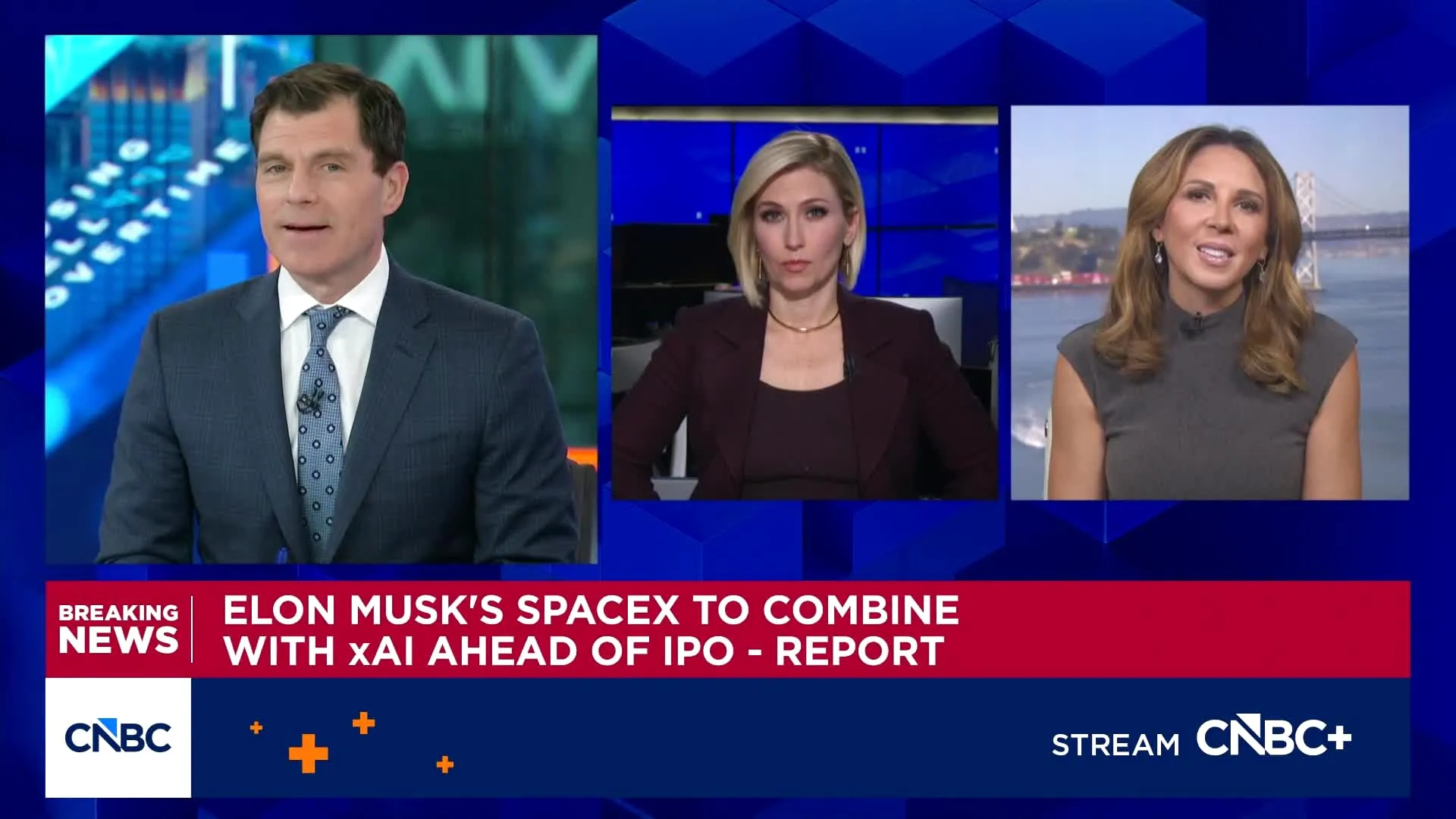
While the exact financial terms of the SpaceX-xAI deal have not been publicly detailed, the combined entity is estimated at around $1.25 trillion in value, based on Bloomberg analysis. This valuation underpins potential funding strategies that might include:
SpaceX’s internal Funding: The company possesses internal capital and revenue streams like Starlink, launches, and contracts planned for backup.
Government and defense contracts: With existing SpaceX deals alongside NASA and U.S. defense projects, public funding could support dual-use capabilities in space operations.
SpaceX IPO proceeds: Plans to list SpaceX publicly in 2026 could raise capital specifically earmarked for orbital infrastructure development, including satellite build-out and solar arrays. potentially raising ~$50 billion or more, with xAI now part of the equity base.
Strategic corporate investments: Musk’s Tesla reportedly invested billions in xAI before the acquisition, tying electric vehicles, energy products, and AI development closer together. This indirectly creates an equity stake in SpaceX’s AI ambitions for public shareholders.
Sovereign and infrastructure funds: Large institutional pools, especially in the Middle East and Asia, may be attracted by the long-term scalable nature of space-based compute and energy assets.
Despite high upfront costs (like developing orbital hardware and solar arrays), SpaceX’s leadership argues the space-AI model could become cheaper than terrestrial centers within a few years. The xAI valuation and conversion terms (e.g., share conversion rates, potential xAI stock price implications) will matter to investors eyeing growth vs. profitability trade-offs.
Starship SpaceX: Long-Term Vision & Future Outlook
The SpaceX and XAI merger and its roadmap hint at several transformative shifts in the market that include:
New AI Infrastructure Paradigm: Shifting computing into orbit could unlock virtually unlimited scaling for AI research, machine learning, and simulation, fueling breakthroughs in robotics, autonomous systems, climate models, and more.
Synergy with Space Exploration: If you have seen the recent out-of-this-world dining experience, you know the worth of exploring space. Revenue from the project could subsidize broader SpaceX goals like lunar bases and Mars missions, tying infrastructure to broader civilization expansion.
Investment Ecosystem Impact: This would create new asset classes in space infrastructure, renewable orbital energy, and high-performance computing. One could witness space-AI ventures alongside traditional tech stocks (e.g., Meta stock or cloud providers).
Competitive Tech Landscape: The SpaceX and xAI merger places Elon Musk’s venture ahead of competitors exploring similar ideas.
Is SpaceX Starship Profitable? What This Means for Investors
SpaceX has been profitable in part due to its commercial launch backlog and Starlink revenues, but large-scale orbital data centers represent a long-term, capital-intensive bet. Investors will watch metrics like:
Launch cadence and Starship reliability
Solar infrastructure deployment
AI services adoption and revenue
IPO performance and valuation growth
If executed well, this strategy could reshape the future of AI infrastructure and broaden SpaceX’s business beyond aerospace into a global computational powerhouse powered by the sun and orbiting networks, truly justifying SpaceX's acquisition of xAI.
In summary:
SpaceX’s acquisition of xAI isn’t just a tech merger or corporate consolidation; it’s a bold business pivot toward a new space-based AI economy. This merger blends artificial intelligence, renewable solar power, satellite infrastructure, and next-generation investment opportunities. This step is shaping the next era of technology, energy, and human civilization.
Further Reads:
https://www.bbc.com/news/articles/cq6vnrye06po
https://finance.yahoo.com/news/musks-spacex-merge-xai-combined-212210116.html

Stay updated with our latest news and articles. Join our newsletter!
Trending Now
No trending posts found.