

What Net Worth Means, How It’s Calculated, Elon Musk’s Wealth & Trillionaire Prospects, Billionaire Wealth Explained
2025-12-15
What Is Net Worth? The Core Definition
At its most basic, net worth is the financial metric that represents the value of everything you own (your assets) minus everything you owe (your liabilities). This simple formula — assets less liabilities — is used for individuals, companies, and even entire nations. For example:
Net Worth = Total Assets − Total Liabilities
Here’s what that means in practice: your assets include everything you own of value (cash, investments, property, businesses, etc.), and your liabilities are your debts (loans, mortgages, credit obligations). The result is your net worth — essentially your financial snapshot at a given moment.
This is universally applied — from everyday personal finance to the richest people on the planet.
But here’s the catch: net worth does not equal cash in the bank. It can be mostly paper value based on market prices, not actual liquid funds you can spend immediately. For everyday people this is obvious — your home is part of your net worth but you can’t spend that like cash without selling it. For billionaires and ultra-high-net-worth individuals it becomes even more acute: most of their net worth is tied up in company stakes and assets that aren’t easily converted into cash without market impact.
How Net Worth Is Calculated — Methodologies and Reality
In practical terms, calculating net worth, especially for the ultra-wealthy, involves estimating the value of:
Publicly traded shares — valued using current market prices
Private companies and startups — estimated using fundraising valuations or comparable public company multiples
Real estate and other tangible assets — appraised values (land, homes, aircraft, art)
Cash and liquid holdings
Debt and liabilities — subtracted from total asset value
For publicly traded shares, the math is simple: the number of shares times the share price equals the market value of that stake. But private companies complicate the picture since they have no public price — analysts use recent funding rounds and comparable businesses to estimate value. This is why net worth estimates are always approximations. Different outlets (e.g., Forbes vs Bloomberg) can show materially different numbers for the same person due to methodology differences.
In fact, for private companies like SpaceX or xAI — both key parts of Elon Musk’s wealth — estimates are based on the most recent funding rounds and market sentiment, not on firms trading on the open market.
Thus net worth is best understood as a dynamic estimate, not a fixed bank balance.
Elon Musk’s Net Worth: A Case Study
Elon Musk — the CEO of Tesla and SpaceX, and founder of several other ventures — is the flagship example often cited in discussions about extreme wealth because his estimated net worth dwarfs that of virtually any individual in history.

Musk’s Wealth Today
According to Forbes’ real-time billionaire tracker, Elon Musk’s net worth has touched ~$499 billion as of late 2025, making him the first individual to briefly exceed $500 billion in estimated personal net worth.
This astonishing number doesn’t reflect cash ready to spend — rather it is based on a combination of:
1. Tesla — roughly 12–13% ownership in the electric carmaker, a company with a multitrillion-dollar market cap.
2. SpaceX — an estimated $400 billion valuation for the private rocket company, of which Musk owns around 40+%.
3. xAI/X — the combined private AI and social media entity valued in the tens of billions.
Notably, Musk’s wealth surged thanks to Tesla’s stock performance and the rising equity valuations of his other ventures. But stock valuations move constantly — and thus so does his net worth.
Paper Wealth vs. Cash
Despite the dizzying headline figure, Musk has referred to himself as “cash poor,” emphasizing that *he doesn’t hold most of that value in spendable cash but rather in stakes in companies and long-term assets.
Selling large chunks of his shares to convert them into real cash would:
a. Dilute his ownership
b. Potentially lower stock prices
c. Trigger massive tax liabilities
So the reality is that the published net worth numbers are mostly about ownership value, not money ready to be spent.
Could Musk Become the First Trillionaire?
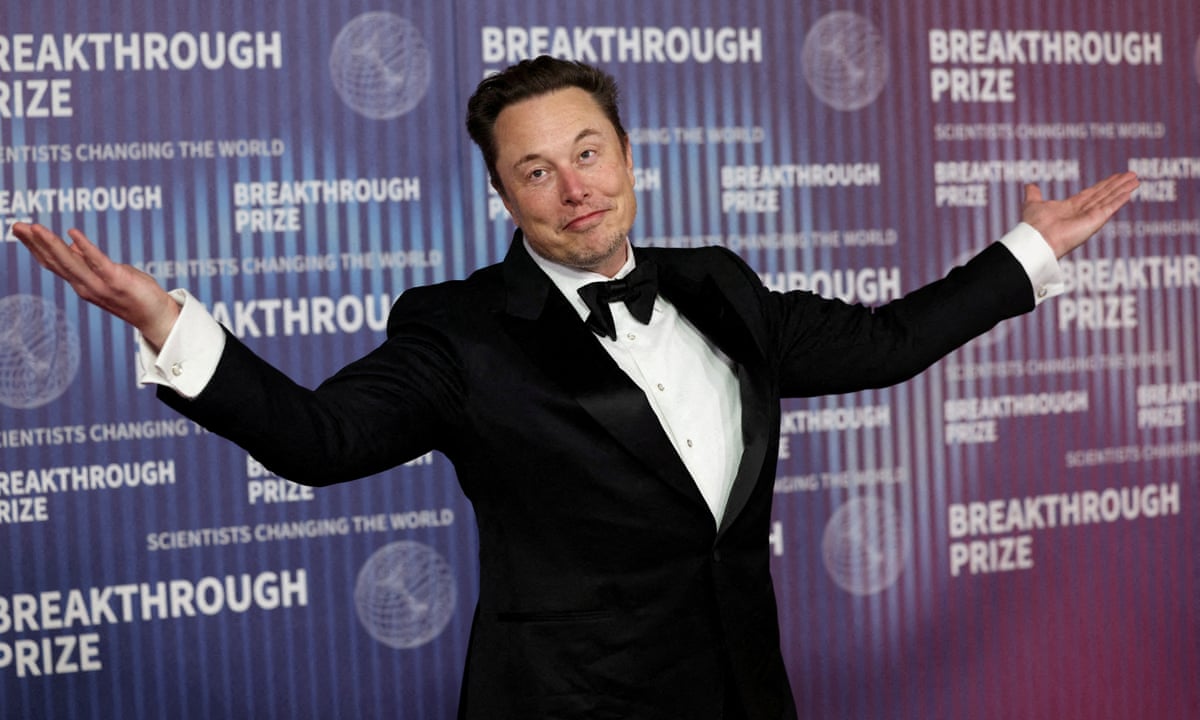
There’s ongoing discussion in financial media about the possibility that Musk could one day become the world’s first trillionaire on paper — someone whose estimated net worth exceeds $1 trillion.
How Might That Happen?
One major driver is a potential Tesla compensation package that could deliver Musk up to $1 trillion in stock awards if the company achieves aggressive growth targets over the next decade. Such performance-linked equity grants would increase his share ownership on paper if targets are met, boosting his estimated wealth dramatically.
Analysts estimate that if Tesla’s market capitalization grows several times over, combined with private valuations of SpaceX and other ventures, Musk’s net worth could cross the trillion-dollar threshold before the early 2030s.
But — and this is critical — this still would be a paper milestone. It would reflect prevailing stock valuations and assumed future performance, not trillions of actual, liquid currency in Musk’s bank account.
What Does That Paper Wealth Actually Mean for Musk?
Reaching “trillionaire” status on paper would mostly confer:
a. Immense market influence through his ownership positions
b. Control over high-value companies that shape global technology
c. Leverage to influence capital markets and innovation trends
It does not mean he can:
1. Withdraw $1 trillion to spend freely
2. Pay it all in taxes at once
3. Or instantly transform it into philanthropic spending
For billionaires like Musk, access to liquidity typically comes from borrowing against their holdings rather than selling them outright — a strategy used to access cash without triggering capital gains taxes or losing ownership control.
Where Billionaire Wealth Really Sits — And Why We Don’t “See” It
One of the biggest misconceptions about net worth at the extreme upper end is the assumption that rich people have literal mountains of cash. This is almost never true for ultra-high-net-worth individuals. Instead:
a. Wealth is largely equity and stakes in businesses
b. Some in private market assets (which aren’t traded on exchanges)
c. Minor portions in luxury assets and real estate
d. And some liquid cash or bonds
This is why Musk, whose net worth may be approaching $500 billion or more, doesn’t have trillions of dollars lying around in bank accounts. It is, instead, paper wealth contingent on market prices and business performance.
Even tangible assets like mansions, planes, or art — though impressive — form only a tiny fraction of billionaire net worth compared to business equity.
Hidden Trillionaires: Institutions With Trillions Under Management
While individual trillionaires remain hypothetical, there already exist entities that control trillions in assets — though not as personal wealth:
a. Sovereign Wealth Funds (SWFs): e.g., Norway’s Government Pension Fund Global manages over $1 trillion in assets — invested globally across stocks, bonds, and real estate. This is nation-owned capital, not personal wealth.
b. Asset management giants: Firms like BlackRock or Vanguard oversee trillions of dollars for clients worldwide.
These institutions influence markets far more broadly than any individual, yet they are not personal net worth, but money managed on behalf of others.
The reason we don’t “see” this money physically is because it is invested across global markets — not sitting as cash waiting to be spent. Institutions aim to generate returns over time through investment, not hoard paper money.
How Billionaires Use Their Wealth
When wealthy individuals deploy their capital, it generally falls into a few major channels:
1. Reinvesting in Business
Many billionaires continue to funnel their wealth back into their companies, funding R&D, expansion, acquisitions, and strategic growth.
2. Private Investments and Venture Capital
Some channel funds into startups, angel investing, or private equity, often via family offices. This can generate outsized returns and diversify wealth.
3. Borrowing Against Holdings
Rather than selling shares, billionaires often borrow against them to fund purchases or investments — this preserves their equity stakes and defers taxes.
4. Real Estate and Luxury Assets
While visible and newsworthy, luxury purchases (homes, yachts, art, jets) constitute a small slice of net worth for the ultra-rich.
5. Philanthropy
Some wealthy individuals allocate funds to philanthropic causes, though the scale and structure vary widely. Musk himself has made public pledges and donations through the Musk Foundation, though historically relatively small compared to his total net worth.
Where Does Wealth Go in the Big Picture?
Wealth at the top of the economic pyramid doesn’t disappear — it circulates through systems:
Reinvestment into Capital Markets
Growth in valuations, new IPOs, and reinvesting capital into new ventures drives economic activity.
Funding Innovation
A portion of billionaire capital funds technological innovation, infrastructure projects, space exploration, AI development, and energy transitions.
Taxes and Public Budgets
Capital gains and corporate taxes feed public budgets (albeit tax planning often reduces effective rates for individuals).
Consumption and Lifestyle
Although a tiny share of their overall wealth, spending on luxury goods supports jobs and markets in those sectors.
The paradox is that most wealth is not cash—it’s claims on future profits, represented as equity and debt instruments that express expectations of future earnings or utility.
The World With So Much Wealth Concentration
Extreme wealth concentration — not just Musk, but the combined fortunes of tech leaders and financiers — raises macroeconomic and social questions:
1. Inequality and purchasing power disparities
2. Influence over policy and media
3. Impact on investment priorities (e.g., defense, AI, climate)
4. Potential for systemic fragility if markets correct sharply
The ongoing debate isn’t just about how rich people are, but what concentrated ownership means for society, opportunity, and economic dynamism.
Conclusion — Net Worth Is a Snapshot, Not a Wallet
In financial terms, net worth is a useful but imperfect measure of economic stature. For most people, it’s a personal finance metric telling them how much they’re worth after debts. For the ultra-wealthy, it’s a paper representation driven by market valuations, not cash balances. Musk’s trajectory toward trillionnaire headlines underscores just how powerful and speculative modern valuations have become, but it doesn’t mean someone literally holds a trillion dollars to spend.
In the grand scheme, net worth reflects how markets value future profit streams, innovation, and ownership claims — and it offers a window into wealth concentration, economic growth, and financial systems that define our era.
By [Tommy Thounaojam]

Stay updated with our latest news and articles. Join our newsletter!
Trending Now
No trending posts found.


