Corporate Cuts and Personal Comebacks: How a pink slip isn’t the end of the road!
2026-05-26
The Reality of Layoffs: Is it the end of the road?
Whether personal or purely business-driven, a layoff is something no employee ever wants to experience. Yet in the post-COVID era, layoffs have become an unavoidable part of modern work culture. Thousands of employees across industries are struggling to make ends meet after suddenly losing their jobs, often during a time when financial pressures were already mounting even while employed.
According to reports from Bloomberg, global layoffs across the tech and corporate sectors have continued to reshape the modern workforce in the post-pandemic economy.
Today, major corporations are increasingly prioritizing downsizing and profit-driven strategies over long-term workforce stability. The era of layoffs being tied solely to “poor performance” has largely faded, replaced by large-scale restructuring efforts focused on cutting costs and satisfying investors. Companies such as Meta and Accenture have made headlines for slashing thousands of jobs despite remaining industry giants. In some cases, employees woke up to emails sent in the early hours of the morning informing them that their positions had been eliminated overnight.
Behind every number in a corporate layoff announcement is a person suddenly forced to rethink their future. What companies often describe as “restructuring” or “organizational optimization” translates into uncertainty, anxiety, and disruption for workers trying to navigate an increasingly unstable job market. Several layoff announcements from companies such as Meta and Accenture were widely covered by Bloomberg, highlighting the growing trend of profit-driven restructuring.
The emotional impact is amplified by the culture surrounding modern work. Social media platforms like LinkedIn often showcase promotions, achievements, and success stories, making unemployment feel isolating and difficult to discuss openly. Behind polished corporate announcements and phrases like “workforce optimization” are real people dealing with uncertainty, anxiety, and the pressure to rebuild quickly.

The Emotional Fallout: How do people deal with such a burden?
While layoffs are often presented as strategic business decisions, the emotional impact they leave behind is deeply personal. For many employees, losing a job is not just about losing a paycheck; it is about losing stability, routine, identity, and a sense of purpose. After dedicating years of effort to a company, being told that your role is no longer needed can feel cold, sudden, and deeply isolating.
The shock of a layoff often arrives without warning. One moment, employees are attending meetings and planning projects for the future; the next, they are locked out of company systems or sitting through a brief HR call that changes their lives entirely. In today’s corporate culture, where layoffs are increasingly communicated through mass emails or virtual meetings, the experience can feel even more impersonal.
Beyond the immediate financial concerns comes the emotional burden that follows. Many workers begin questioning their self-worth, talent, and career choices, even when layoffs have little to do with individual performance. Feelings of embarrassment and anxiety become common, especially in a world where professional success is constantly showcased online. Platforms like LinkedIn often become difficult spaces to navigate, filled with promotion announcements and career milestones while recently laid-off employees quietly struggle behind the scenes. In interviews reported by Bloomberg, many laid-off employees described the emotional toll of suddenly losing stability despite years of corporate loyalty.
The mental toll can also affect personal relationships and overall well-being. Stress about bills, family responsibilities, and an uncertain future can quickly spiral into burnout, loss of confidence, and emotional exhaustion. Some employees rush into jobs they do not want simply out of fear, while others spend months trying to rebuild their confidence before re-entering the workforce.
Despite their layoffs, people don’t feel that their abilities do not define their abilities or their future. For some, the experience becomes the catalyst for reflection, reinvention, and personal growth, even if it takes time to see beyond the initial setback.

Reinventing yourself after a Layoff: What’s next?
For many successful entrepreneurs and professionals, a layoff feels like the end of the road. Most tend to delve into the depths of heavy drinking or various depressive phases. Apart from these behaviours having a healthy attitude post a layoff is optimal and heavily encouraged. In a rapidly evolving job market, reinvention has become one of the most valuable survival skills, and countless individuals are now using career setbacks as opportunities to rebuild themselves in ways they never imagined before.
Some employees choose to pivot into completely different industries, leaving behind careers that no longer align with their interests or priorities. Others use the time to upskill in areas such as artificial intelligence, digital marketing, content creation, or data analytics to remain competitive in an increasingly tech-driven economy. The rise of remote work and freelancing has also opened new doors, allowing professionals to explore flexible careers outside the traditional corporate structure.

Turning setbacks into opportunities: Making the most out of what you have
Every career setback carries a sense of disappointment, but for many professionals, those moments eventually become turning points rather than dead ends. In an era where industries are constantly evolving and job security feels increasingly uncertain, setbacks are pushing people to rethink what success truly means and where their potential can take them next.
For some, losing a job becomes the motivation to pursue passions that were previously sidelined by demanding corporate schedules. Employees who once spent years following routine office life are now exploring creative careers, launching businesses, freelancing, or returning to education in hopes of building something more meaningful. What initially feels like failure often creates the space for growth, self-discovery, and long-overdue change.
The rise of digital platforms has also made reinvention more accessible than ever before. Former corporate workers are turning skills in writing, marketing, design, and communication into independent careers online. Others are building personal brands through podcasts, YouTube channels, newsletters, and consulting work. Many people who once depended entirely on a single employer are now creating multiple income streams and finding greater flexibility in the process.
Setbacks can also reshape perspectives on work-life balance and personal fulfillment. After experiencing burnout, toxic workplace environments, or constant pressure to perform, some professionals begin prioritizing mental well-being, family, and personal goals over traditional corporate milestones. The idea of success is slowly shifting from simply climbing the corporate ladder to building a career that offers both stability and purpose.
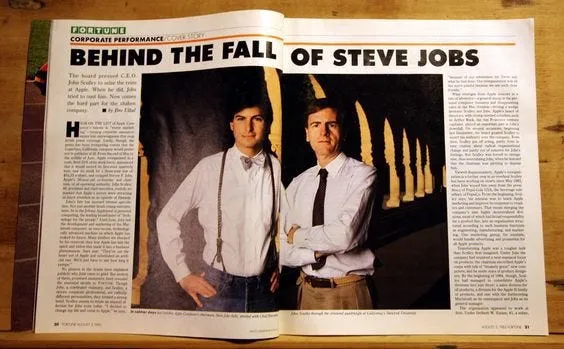
Many well-known success stories are rooted in rejection and uncertainty. Jan Koum faced job rejections before co-founding WhatsApp, while Steve Jobs transformed one of the biggest setbacks of his life into a historic comeback at Apple. Their journeys reflect a growing reality: setbacks may delay success, but they do not have to define a person’s future.
Although the process is rarely smooth, adversity often forces people to adapt, learn, and evolve in ways comfort never could. Sometimes, the opportunities people discover after losing something familiar become far greater than what they originally lost.
Stories of Resilience: Standing tall and looking up at more opportunities
Behind every layoff statistic, there is always some story about resilience. While some people struggle to recover from a sudden job loss, others slowly rebuild themselves through determination, adaptability, and the refusal to give up. In many cases, the people who experience the hardest professional setbacks eventually emerge stronger, finding opportunities they may never have considered otherwise.
During the wave of post-pandemic layoffs, thousands of employees across tech, media, and corporate sectors found themselves unexpectedly unemployed. Many spent months dealing with rejection, financial stress, and uncertainty before finally finding stability again. Some transitioned into freelance work to stay afloat, while others used the opportunity to learn new skills and shift into entirely different industries.
One of the most notable incidents was when Steve Jobs was kicked out of Apple in 1985 after various power struggles with then-CEO John Sculley and the company’s board of directors.
Following disappointing sales of the Macintosh and a clash over corporate direction, Jobs was stripped of his operational duties and subsequently resigned.
For many people, resilience does not mean immediately “bouncing back.” Sometimes it means surviving uncertainty one day at a time, continuing to apply for jobs despite rejection, or slowly rebuilding confidence after months of self-doubt. The road forward is often unpredictable, but these stories prove that professional setbacks do not have to define a person’s future.
In a constantly changing workplace culture, resilience has become one of the most valuable qualities a person can possess. The ability to adapt, recover, and reinvent oneself is what allows many people to transform moments of loss into opportunities for growth and new beginnings.
The comeback mindset: Picking oneself back up from a loss
Recovering from a layoff is not only about finding another job; it is also about rebuilding confidence, perspective, and motivation. The people who successfully move forward after professional setbacks often share one common trait: the ability to adapt. In today’s unpredictable work culture, resilience and flexibility have become just as important as experience or qualifications.
The comeback mindset begins with accepting that setbacks are a part of modern careers. Many professionals spend years believing success follows a straight path, only to discover how quickly industries can change due to economic shifts, automation, or corporate restructuring. Instead of viewing layoffs as permanent failures, more people are learning to see them as moments of transition and redirection.
A major part of moving forward involves letting go of the stigma attached to unemployment. Being laid off does not erase years of hard work, talent, or achievement. Some of the world’s most successful individuals faced rejection, career setbacks, or public failures before eventually finding success. What separates those who recover from those who remain stuck is often mindset rather than circumstance.
The comeback mindset also focuses on growth. Many laid-off employees use periods of uncertainty to learn new skills, expand professional networks, or explore opportunities outside their comfort zones. Whether through freelancing, entrepreneurship, creative work, or further education, people are increasingly discovering that career reinvention is possible at any stage of life.
In many ways, multiple careers are no longer defined by the stability alone, but by the ability to evolve. The people who thrive are often those who are willing to pick themselves back up from their current situation that they are in. A layoff may close one chapter, but with the right mindset, it can also become the beginning of a stronger and more fulfilling future.
Act 2: Rebuilding from scratch
The modern workplace has changed over the years. Traditional career paths are no longer the norm. People tend to pick an entirely different path that isn’t remotely close to their degree or history of work that they were a part of. After facing setbacks, many employees begin exploring opportunities they had previously ignored, whether it is freelancing, entrepreneurship, content creation, consulting, or pursuing entirely new fields of work.
For some, the second act begins with rediscovering personal passions that corporate life had pushed aside. Journalists are launching independent newsletters and podcasts, former office workers are starting small businesses, and creative professionals are finding audiences online through digital platforms. What once felt like a devastating career interruption gradually becomes an opportunity to create a life with greater flexibility, independence, and fulfillment.
Building a second act also requires courage. Starting over can be intimidating, especially in a world where success is often measured through promotions, salaries, and job titles. Many people face uncertainty, financial struggles, and moments of self-doubt before finding stability again. However, these experiences often help individuals develop resilience, adaptability, and a stronger sense of identity beyond their profession.
In the end, a second act is not about returning to the life someone once had; it is about building something stronger from the lessons learned along the way. While layoffs may close one chapter, they can also open the door to new ambitions, unexpected opportunities, and a future that feels more meaningful than the one left behind.
To Conclude:
In today’s rapidly changing world layoffs have become an unfortunate reality for employees across industries. What was once considered rare has now become a defining part of post-pandemic work culture, affecting everyone from fresh graduates to experienced professionals. Behind every corporate restructuring announcement are individuals forced to confront uncertainty, financial pressure, and emotional setbacks overnight.
As emphasized in multiple workforce reports covered by Bloomberg, adaptability and resilience are becoming essential traits in today’s rapidly evolving professional world.
The truth is that no career path in our modern world today is linear. People have their ways of shifting from one job to another irrespective of the path they may be in. Stability can disappear quickly, but so can new opportunities emerge unexpectedly. While losing a job can feel devastating in the moment, it can also become the beginning of personal growth, self-discovery, and a stronger sense of purpose.
A pink slip may close one chapter, but it does not close the entire story. For many people, it becomes the starting point of a second act, one shaped not by fear or failure, but by resilience, adaptability, and the courage to begin again.
By Siddhant Kohli

Stay updated with our latest news and articles. Join our newsletter!
Trending Now
No trending posts found.