

Japan Achieves 1.02 Pbps Internet Speed Breakthrough:6G
2026-04-22
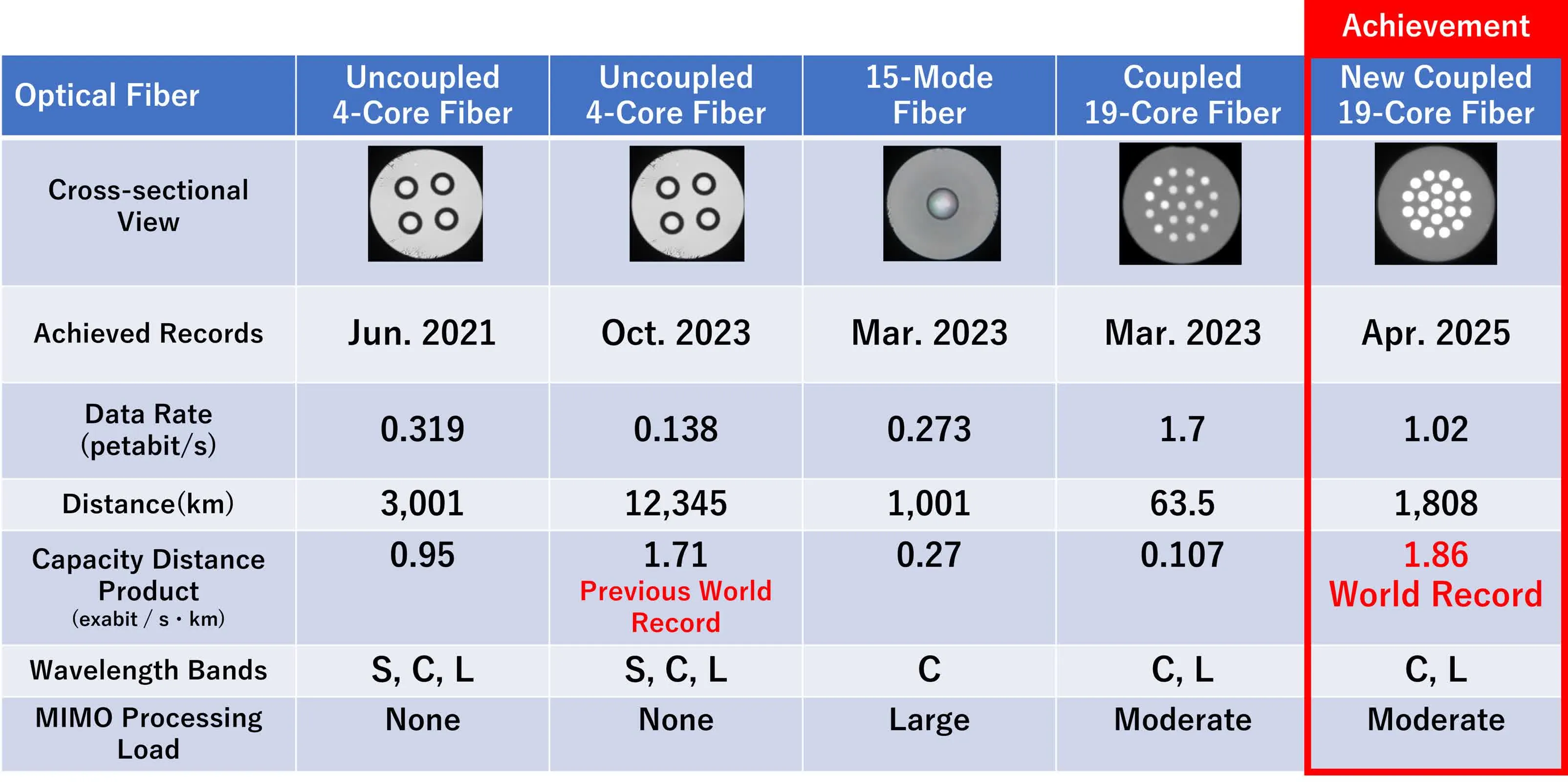
In July 2025, researchers in Japan reported a landmark achievement in optical communications: a data transmission speed of 1.02 petabits per second (Pbps). At that scale, the figure is more than a technical milestone—it is a signal of how dramatically the capacity of global data infrastructure could expand in the coming decades.
To contextualize the magnitude, such a speed could theoretically transfer the entire content library of Netflix—estimated at roughly 8 petabytes of data—in approximately one second under ideal conditions. While the comparison is illustrative rather than practical, it underscores the transformative potential of the breakthrough.
From Kilobits to Petabits: The Long Arc of Internet Speed
The development of internet speed has followed a steady trajectory of exponential growth.
In the early stages of networked computing, systems such as ARPANET operated at kilobit-per-second levels. By the 1990s, consumer dial-up connections peaked at 56 Kbps, limiting usage to basic communication and low-bandwidth browsing.
The 2000s introduced broadband technologies, pushing speeds into the megabit-per-second range and enabling media-rich applications. The following decade saw fiber-optic networks expand globally, delivering gigabit speeds that supported cloud computing, streaming platforms, and digital transformation across industries.
In the early 2020s, research laboratories began demonstrating terabit-per-second capabilities. The transition from terabit to petabit speeds, achieved in 2025, represents a thousand-fold increase and a fundamental shift in what is technically feasible.
Understanding the Scale of 1.02 Pbps
A petabit equals one million gigabits. At 1.02 Pbps, the system can transmit approximately 127.5 terabytes per second.
At this rate, enterprises could move massive datasets—such as AI training models, genomic databases, or global financial records—almost instantaneously. Data center synchronization, which currently takes minutes or hours, could occur in near real time.
The frequently cited comparison to Netflix’s full catalog is based on estimated storage requirements rather than an operational scenario. It serves as a useful benchmark for illustrating the sheer throughput involved.
The Technology Behind the Breakthrough
The achievement was made possible by a combination of advanced optical and signal-processing innovations.
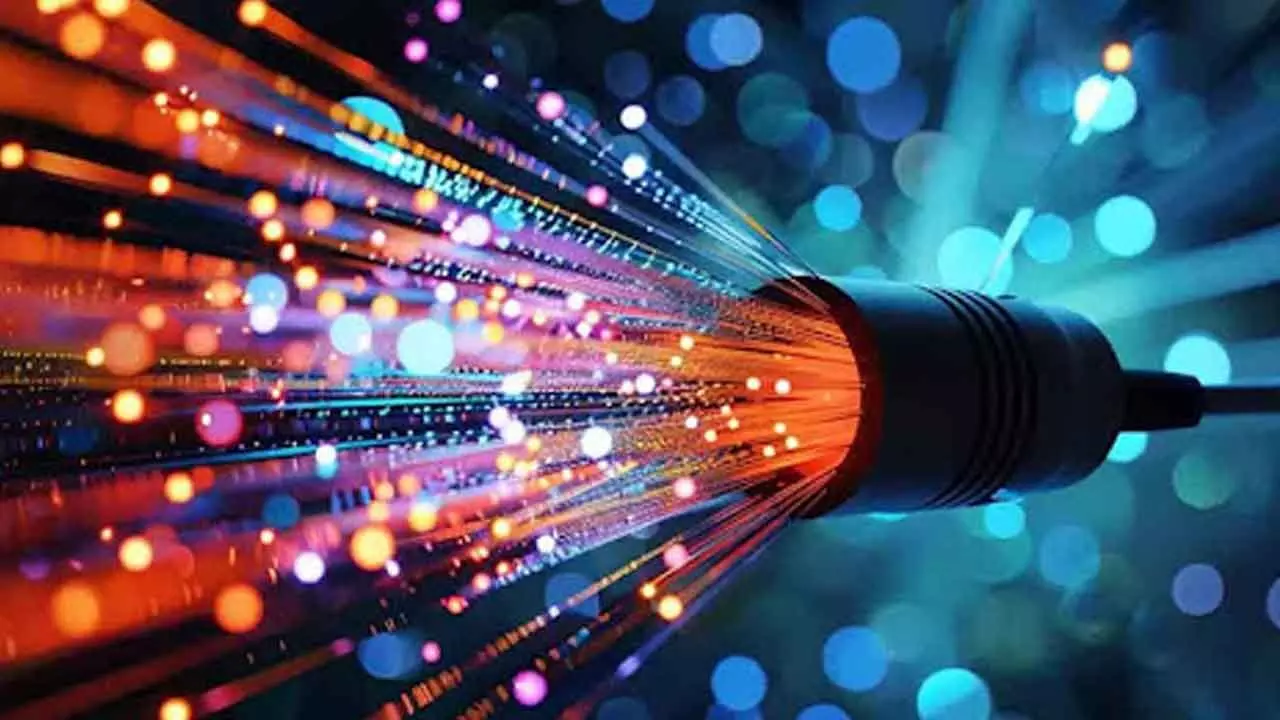
Multi-core optical fiber played a central role. Unlike conventional fiber, which transmits data through a single core, multi-core fiber enables parallel data streams within the same cable, dramatically increasing capacity.
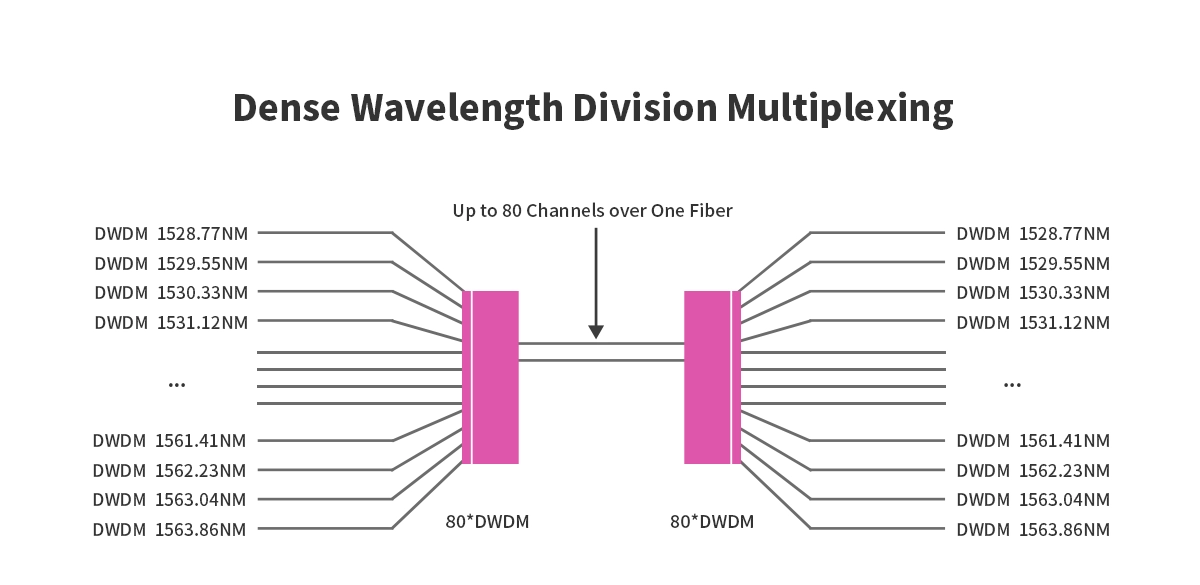
Dense Wavelength Division Multiplexing (DWDM) further enhances throughput by transmitting multiple wavelengths of light simultaneously, each carrying independent data channels.
Imagine a multi-lane superhighway compared to a single-lane road. DWDM operates on a similar principle for optical fiber. It allows multiple optical carrier signals, each carried on a distinct, precisely spaced wavelength (or color) of laser light, to be transmitted simultaneously down a single strand of optical fiber.
The "Dense" in DWDM refers to the tight spacing between these wavelengths. Unlike its cousin CWDM (Coarse Wavelength Division Multiplexing), which uses wider spacing (typically 20nm), DWDM utilizes much narrower channel spacing, often 0.8nm, 0.4nm (50GHz), or even 0.2nm (25GHz) in advanced systems. This density enables packing dozens, even hundreds, of individual data channels onto one fiber pair.
In addition, advanced modulation techniques and signal processing improved how efficiently data is encoded and decoded, maximizing the usable bandwidth.
Crucially, the system maintained its performance over distances exceeding 1,800 kilometers, demonstrating that the technology is not limited to short-range laboratory conditions.
Strategic Implications for Industry
While commercialization remains a long-term prospect, the implications for multiple sectors are significant.

Telecommunications and Infrastructure
The breakthrough points toward future backbone networks capable of handling exponentially higher data loads, addressing the growing demands of global connectivity.
Artificial Intelligence and Data Science
AI development increasingly depends on the movement of vast datasets. Ultra-high-speed transmission could reduce training times and enable more distributed computing models.
Cloud Computing and Data Centers
Cloud providers could benefit from faster interconnects between data centers, improving redundancy, performance, and global service delivery.
Media and Entertainment
Although current consumer demand does not require petabit speeds, future formats such as immersive media and ultra-high-resolution streaming could eventually rely on such infrastructure.
Scientific Research
Fields that generate massive datasets—such as climate science, particle physics, and genomics—would gain the ability to share and analyze data at unprecedented speeds.
Barriers to Commercial Adoption
Despite its promise, several challenges stand in the way of widespread deployment.
Infrastructure requirements are significant, as existing networks would need substantial upgrades to support multi-core fiber systems. The cost of deployment remains high, and current consumer hardware is not designed to utilize such extreme bandwidth.
Moreover, network performance depends on the entire data path. Even if backbone speeds increase dramatically, bottlenecks at endpoints and regional networks could limit real-world gains.
You Might also Read: Digital Wallets & What They Mean For Your Daily Transactions
Frequently Asked Questions
1. Is 1.02 Pbps commercially available?
No. The achievement is currently limited to a research environment.
2. How does this compare to consumer internet speeds?
Typical consumer connections range from tens of megabits to a few gigabits per second, making them millions of times slower.
3. Can this speed be used for everyday applications?
Not at present. Most applications do not require such bandwidth, and supporting infrastructure is not yet in place.
4. What exactly is a petabit?
A petabit equals one quadrillion bits, or one million gigabits.
5. Why is Netflix used as a comparison?
It provides a familiar reference point to illustrate the scale of data transfer.
6. Is the “one-second download” realistic?
It is a theoretical calculation under ideal conditions, not a practical scenario.
7. Which industries will benefit first?
Telecommunications, cloud computing, and scientific research are likely early beneficiaries.
8. How long before this reaches consumers?
Adoption could take years or decades, depending on cost and infrastructure development.
9. Is this related to 5G or 6G?
No. This is a fiber-optic transmission breakthrough, not a wireless technology.
10. What comes after petabit speeds?
Researchers are already exploring multi-petabit and potentially exabit-scale transmission.
Conclusion
Japan’s 1.02 petabits per second milestone represents more than a record-setting experiment; it reflects the accelerating pace of innovation in global data infrastructure. While the technology is not yet ready for commercial deployment, it offers a clear indication of where the industry is headed.

As data volumes continue to grow and digital systems become more interconnected, the ability to transmit information at such extreme speeds could reshape everything from enterprise operations to scientific discovery. The path to adoption will require substantial investment and technological evolution, but the direction is unmistakable: the future of connectivity will be defined by capacity at a scale that, until recently, seemed implausible.

Stay updated with our latest news and articles. Join our newsletter!
Trending Now
No trending posts found.
Related Articles
Debug: Tags used: Japan internet speed, 1.02 Pbps, petabit internet, fastest internet speed, optical fiber breakthrough, multi core fiber, DWDM technology, future internet, AI data transfer, cloud computing infrastructure, high speed internet research, global network innov