

Sunita Williams Retires From NASA After 27 Years and 608 Days in Space
2026-01-21
Sunita Williams Retires From NASA, Closing a Defining Chapter in Human Spaceflight
When Sunita “Suni” Williams first rocketed into orbit in 2006, the global space landscape looked very different. The International Space Station (ISS) was still under construction, commercial spaceflight was more promise than practice, and the idea of a sustained human presence in low Earth orbit remained a complex geopolitical and engineering experiment. Nearly three decades later, Williams is stepping away from NASA, leaving behind a career that has helped transform that experiment into a durable, evolving platform for exploration.

Williams, an Indian-origin astronaut and one of NASA’s most recognizable figures, has announced her retirement after a 27-year career that included three space missions and a cumulative 608 days in space—one of the longest records for any U.S. astronaut. Her departure marks not just the end of an individual career, but a generational shift at NASA, as the agency increasingly hands the reins of low Earth orbit to commercial partners while refocusing on deep-space ambitions.
“Suni Williams has been a trailblazer in human spaceflight, shaping the future of exploration through her leadership aboard the space station and paving the way for commercial missions to low Earth orbit,” NASA Administrator Jared Isaacman said in a statement, underscoring her role in bridging NASA’s traditional astronaut corps with its commercial future.
Born in Euclid, Ohio, to a family with Indian roots, Williams built her career on a blend of technical rigor and operational discipline. She earned a master’s degree in engineering management from the Florida Institute of Technology in Melbourne, Florida—a background that would later prove essential as astronauts took on roles not just as explorers, but as on-orbit managers of extraordinarily complex systems. Before joining NASA, Williams served as a U.S. Navy helicopter pilot and test pilot, logging thousands of flight hours and gaining experience that translated naturally to the unforgiving environment of spaceflight.
Her first space mission in 2006 quickly established her as a standout. Williams became a fixture aboard the ISS, where she carried out scientific experiments, performed multiple spacewalks, and took on leadership responsibilities that went far beyond symbolic command. Over the years, she would help maintain the station during a period when NASA was retiring the Space Shuttle program and learning to rely on Russian Soyuz spacecraft—and later, on commercial vehicles developed by U.S. companies.
Perhaps most notably, Williams became a visible symbol of continuity during a time of transition. As NASA shifted its strategy, encouraging private companies to handle routine missions to low Earth orbit, astronauts like Williams ensured that institutional knowledge, safety culture, and operational excellence were not lost in the handoff. Her experience helped validate the idea that government astronauts and commercial partners could work side by side, a model now central to NASA’s long-term plans.
Beyond the technical achievements, Williams’ career has carried broader cultural significance. As one of the most prominent astronauts of Indian origin, she has been a source of inspiration across continents, particularly in India and among the global Indian diaspora. Her presence in space resonated far beyond NASA press releases, reinforcing the increasingly international and inclusive nature of modern science and exploration.
Williams’ retirement comes at a moment when NASA itself is redefining success. The ISS is expected to be retired in the coming decade, replaced by commercially operated space stations, while the agency turns its attention to the Moon through the Artemis program and, eventually, to Mars. In that sense, Williams exits the stage having helped complete one era and lay the groundwork for the next.
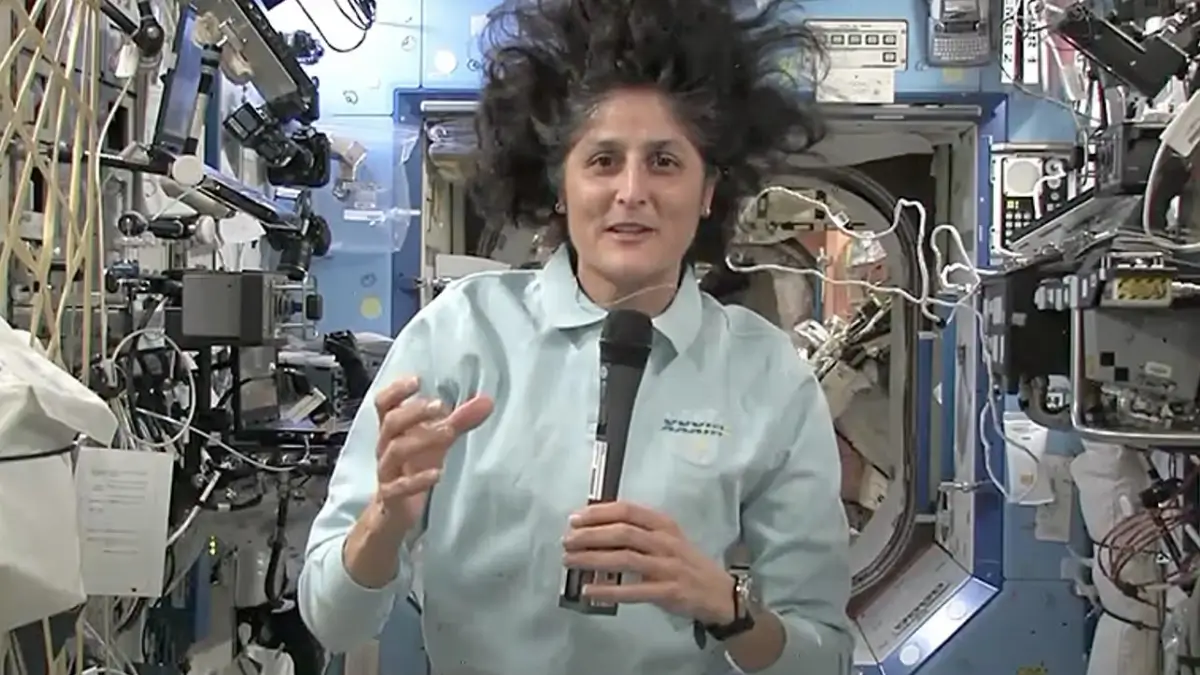
Her legacy is not just measured in days spent in orbit or missions completed, but in the systems she helped stabilize, the teams she led, and the pathways she helped open. As NASA looks toward deeper space and greater private-sector involvement, the career of Sunita Williams stands as a reminder that progress in space is built not only on rockets and technology, but on experienced leaders willing to carry institutions through change.
For a generation of astronauts and engineers who will follow, Williams leaves behind a model of what it means to explore responsibly, lead decisively, and adapt as the boundaries of spaceflight continue to expand.

Stay updated with our latest news and articles. Join our newsletter!
Trending Now
No trending posts found.
Related Articles
Debug: Tags used: Sunita Williams, NASA astronaut, NASA retirement, Indian-origin astronaut, spaceflight, International Space Station, ISS missions, NASA careers