Investing Made Simple: Low-Fee Index Funds, Mutual Funds, and Returns You Can Expect
2026-08-24
Investing is as necessary as saving, accepted, but it seems unnecessarily complicated when you are just starting. You hear about mutual funds, index funds, ETFs, expense ratios, active management, and market returns, and suddenly choosing where to put your money feels like a job in itself. But the basic idea is much simpler.
Here, rather than trying to pick an individual stock or the best stock to invest in, you are putting your money into an investment vehicle that is a collection of assets. The real beginner's question is "How do I choose a diversified fund, keep my costs reasonable, and stay invested long enough for compounding to work?"
What Is An Index Fund?
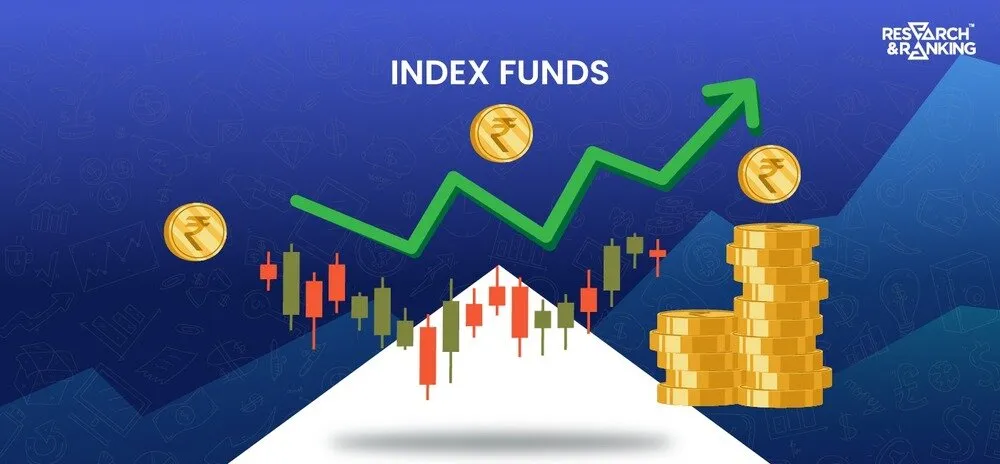
- Imagine the S&P 500 as a basket containing shares of 500 large U.S. companies.
- In index funds, instead of buying and selling individual stocks, you invest in each option in small amounts.
- It is a passive investment strategy to track an index by holding the securities in that index, or a representative sample of them.
- The attraction is simple: you aren't betting everything on identifying the next winning company. You are essentially saying: "I want to own a broad slice of the market and participate in its long-term performance."
- That doesn't make an index fund risk-free. If the market falls, the index fund generally falls with it.
Why Are Low-fee Index Funds so Popular?
- It's important to understand that any fund investment incurs fees that you pay for owning it.
- Every fund has costs. These can include operating expenses, management fees, and, depending on the fund, sales loads or other charges. Those costs ultimately reduce what remains in your investment.
- Consider a simplified example:
Suppose two investments both generate the same 7% gross annual return.
Fund A | 0.10% | Very low cost |
Fund B | 1.00% | Higher cost |
Now the difference in fees is 0.90%, which might look insignificant, but over decades, it compounds because you are not only losing the fee, you are also losing the future growth that money could have generated. For a more concrete example of why low-fee index funds matter;
Initial Investment | Annual Growth Before Fees | Annual Fund Fee | Investment Period | Approx. Value After 20 Years | Difference |
$100,000 | 4% | 0.25% | 20 years | $208,000 | - |
$100,000 | 4% | 1.00% | 20 years | $179,000 | $29,000 less |
It doesn't mean the cheapest fund is automatically the best fund. You still need to look at what the fund owns, how it tracks its index, its risks, and other costs. But when otherwise similar funds have similar performance, lower costs generally leave more return in the investor's pocket.
Index Funds vs. Mutual Funds For Beginners: Are They the Same Thing?
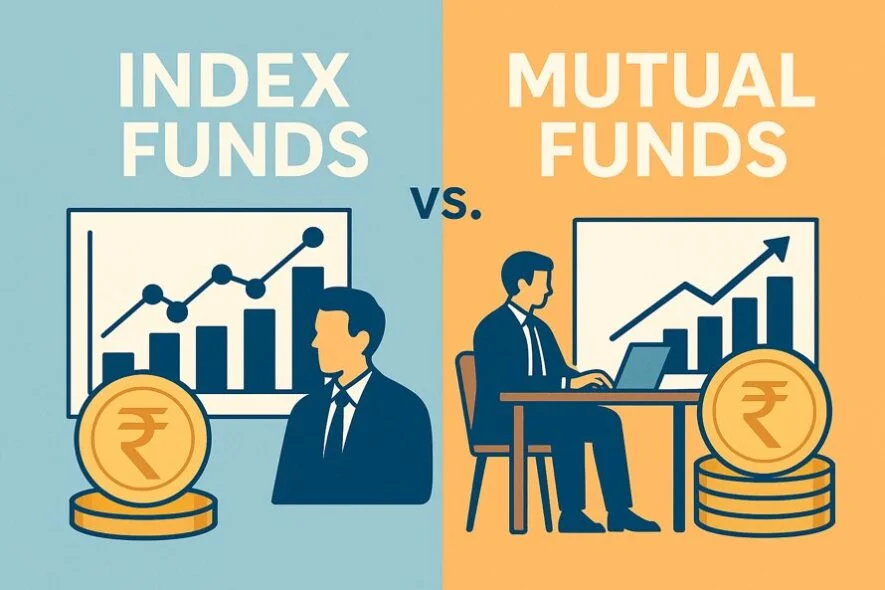
An easily confused term among beginners, "Mutual fund" is a type of investment vehicle. "Index fund" is an investment strategy. Here’s a little beginner-friendly comparison
Feature | Low-fee Index Fund | Actively Managed Mutual Fund |
Defination | A fund designed to follow a particular market index | A pool of money from many investors (self-managed or by a manager) |
Strategy | Tracks an index | Manager selects investments |
Goal | Approximately match the index before fees | Try to outperform a benchmark or meet another objective |
Trading | Generally lower turnover | Can involve more frequent trading |
Cost | Often lower | Often higher, though not always |
Diversification | Usually broad if tracking a broad index | Depends on the fund |
Manager decisions | Limited | Central to the strategy |
Beginner appeal | Simple and transparent | Requires more evaluation of manager, strategy and costs |
Main risk | Market/index risk | Market risk + risk of underperforming the benchmark |
Importantly, not every index fund is cheap and not every actively managed fund is expensive. Check the actual expense ratio and other costs rather than relying on the label.
What Average Mutual Fund Return Can You Expect?
- There is no single average return for all mutual funds; an average mutual fund return history is an estimate of collective data.
- Different funds invest in different assets, so their returns can vary widely.
- For example, a bond fund may have lower potential returns and lower risk, while a stock-market fund may offer higher potential returns but also experience bigger ups and downs.
Investment/Index | Period | Average Annual Return | Investment | Estimated Value at End of Period | What It Shows |
S&P World Index | 10 years through mid-2025 | 12.02% | $1,000 | ~$3,113 | Historical performance of global stocks |
Average International Equity Fund | 10 years through mid-2025 | 9.34% | $1,000 | ~$2,444 | Funds can perform differently from their benchmark |
Vanguard S&P 500 Index Fund | 10 years through May 31, 2026 | ~14.1% | $1,000 | ~$3,751 | Historical performance of U.S. large-cap stocks |
Vanguard S&P 500 Index Fund | Since 1976 | ~11.7% | $1,000 | ~$52,800* | Shows its long-term historical average |
But an average annual return history does not mean you will earn that percentage every year.
Year | Return |
Year 1 | +20% |
Year 2 | +8% |
Year 3 | −15% |
Year 4 | +25% |
Year 5 | −5% |
So, don't invest assuming that a mutual fund will guarantee 10% every year. Mutual funds are market-linked investments, and their value can rise and fall.
How To Process Mutual Funds for Beginners?

Look at the expense ratio.
- Lower ongoing costs can help preserve more of your return over time, so look for low-fee index funds.
Understand what the fund owns.
- The SEC specifically recommends understanding the index methodology and actual holdings. A fund labelled "index" isn't necessarily broadly diversified.
Check the benchmark.
- Ask: "What index is this fund trying to follow?"
- Then compare the fund's performance with that benchmark after accounting for costs.
Don't fall for average mutual fund return history.
- A fund that performed brilliantly over the previous five years isn't guaranteed to repeat that performance.
Think about your time horizon.
- Money you need soon, and money you're investing for retirement are very different situations.
- Your mix of stocks, bonds and cash should reflect your goals, timeframe and tolerance for losses.
Diversification matters
- Owning a broad collection of investments can reduce the impact of any single company performing badly, although diversification cannot eliminate market losses.
If you are new to investing, use the Mutual Fund Calculator to evaluate your monthly investment ratio.
Frequently Asked Questions
1. Which Nifty 50 index fund is the cheapest?
Ans) As of August 2026, Nippon India Index Fund – Nifty 50 and Navi Nifty 50 Index Fund both show an expense ratio of about 0.06% among direct-plan funds, making them some of the lowest-cost options. However, fees can change, so compare expense ratio and tracking error before investing.
2. Which index fund is better: Nifty 50 or Nifty 100?
Ans) Nifty 50 tracks 50 major companies, while Nifty 100 tracks 100 large-cap companies and combines the Nifty 50 with Nifty Next 50. Nifty 100 therefore provides broader exposure, while Nifty 50 offers a simpler portfolio of India's largest companies. Neither is automatically better; your diversification preference matters.
3. Is the S&P 500 index fund considered a mutual fund?
Ans) Yes, an S&P 500 index fund can be a mutual fund. An index fund is designed to follow a market index, and it can be structured either as a mutual fund or an ETF. For example, investors can buy mutual funds or ETFs that track the S&P 500 rather than investing directly in the index.
4. What is the average historical return of mutual funds?
Ans) There is no single historical average return for all mutual funds because funds invest in different assets and markets. Equity funds, bond funds, international funds, and small-cap funds can have very different results. Historical returns can provide useful context, but they don't guarantee future performance, and investments can lose value.
The Simple Takeaway
One needs to understand that investing is not as complex as it is made out to be. Start small and evolve eventually is teh mantra. For a beginner, investing doesn't have to start with finding the most exciting fund.
It can start with understanding four simple ideas: Keep costs reasonable, diversify, understand what you own, give your investment time. And perhaps the most important lesson is this: don't build your financial future around an advertised return.
Here in index funds vs mutual funds for beginners, the appeal of a low-fee index fund investment isn't that it guarantees spectacular returns; it's about the secure and diversified returns. What matters is choosing an investment approach you understand, one that fits your goals and one you can realistically stick with when the market inevitably becomes uncomfortable.
So investment and returns are complex but not unattainable; start small and get hold while you earn small returns. Follow Micromunch to know more about mutual fund investment and returns.
P. Manika (Performist Content Writer)
Disclaimer: For informational purposes only, based on publicly available sources and not firsthand experience. The author is not a licensed financial advisor, and this is not professional financial advice.

Stay updated with our latest news and articles. Join our newsletter!
Trending Now
No trending posts found.