
Why China Is Tightening AI Rules as Human-AI Interaction Surges
2025-12-29
Why China Is Tightening AI Policies: Regulating the Age of Human-AI Interaction
By the end of 2025, China had become one of the world’s largest and fastest-growing markets for generative AI — with over 515 million users engaging with AI tools for work, entertainment, creativity, or daily tasks, a surge of 266 million users since late 2024.
This explosive adoption reflects how artificial intelligence has moved far beyond niche research labs into everyday digital life, reshaping how people communicate, learn, and even form emotional connections with machines. Yet that transformation has sparked deep concerns within Beijing and driven a policy pivot: from hands-off growth to tight regulatory governance.
AI Engagement Is No Longer Experimental — It’s Mainstream
In cities and rural regions alike, Chinese citizens are using generative AI systems not just for productivity but as companions, creative partners, and social tools. The rapid spread of applications that simulate human personality and emotional responsiveness — from chatbots to visual AI avatars — has prompted authorities to take a harder look at the societal effects of these technologies.
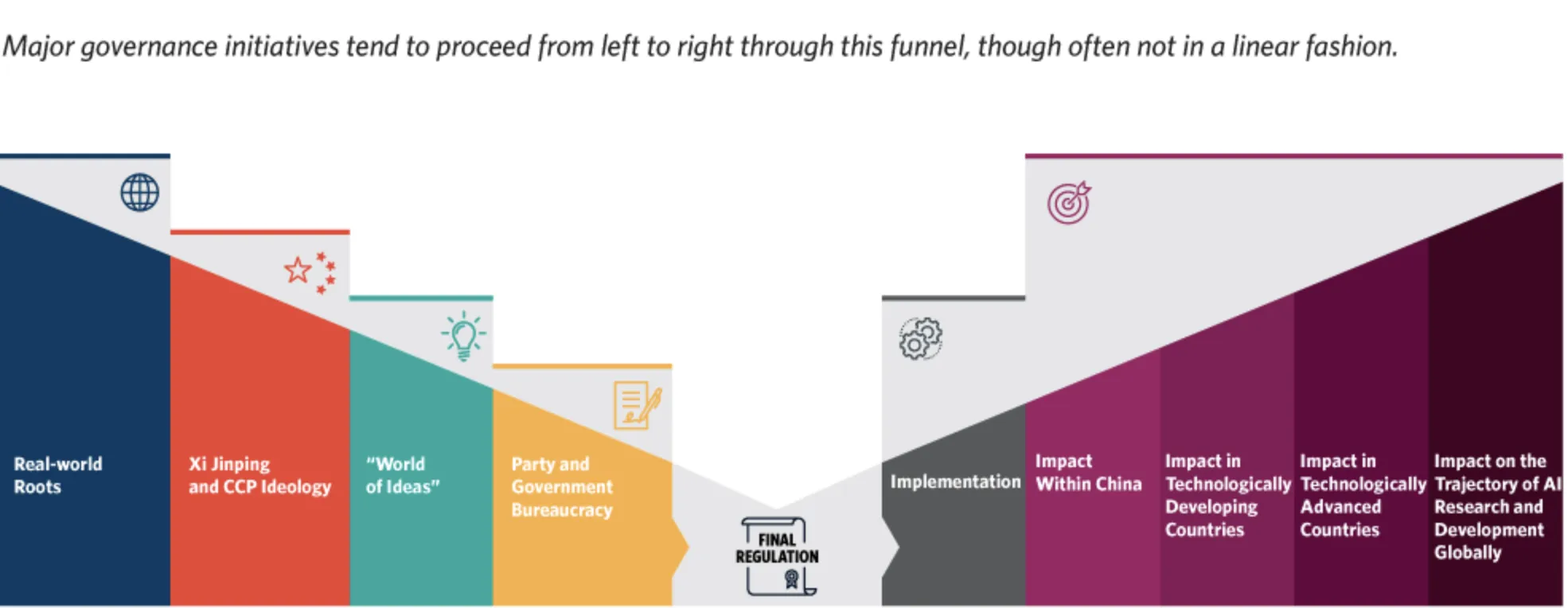
China’s three most concrete and impactful regulations on algorithms and AI are its 2021 regulation on recommendation algorithms, the 2022 rules for deep synthesis (synthetically generated content), and the 2023 draft rules on generative AI. Information control is a central goal of all three measures, but they also contain many other notable provisions.
Government regulators now openly acknowledge that AI usage is massively popular and deeply integrated into daily life. What was once a technological novelty is now a mainstream medium of interaction for hundreds of millions.
Draft Regulations Target Emotion-Driven and Addictive AI
In late 2025, China’s internet regulatory authority introduced draft rules aimed at AI systems that simulate human-like personalities and engage users on an emotional level. These AI services — those that mimic human thinking, conversation, and affective interaction — would face new safety and ethical standards. Providers could be required to:
Warn users about excessive use,
Monitor user behavior for signs of addiction or distress, and
Intervene if emotional dependency risks emerge.
These steps reflect concern that people can spend large amounts of time interacting with AI in place of real humans, blurring lines between user agency and algorithmic influence.
Motivations: Social Stability, Ethical Risk, and National Strategy
China’s tightening isn’t solely about usage statistics — it is also deeply rooted in broader governance imperatives:
1. Social and Psychological Risks:
Authorities are increasingly focused on the potential psychological toll of emotionally engaging AI. Draft rules explicitly aim to mitigate harms such as excessive dependence and emotional distress caused by long sessions with AI personalities.
2. Content Control and Information Stability:
Past outbreaks of AI-generated misinformation — including fake disaster imagery and fabricated news stories — have also underscored the need for stronger oversight to prevent social confusion and protect public trust.
3. Ideological Alignment and Party Priority:
Beijing also emphasizes that AI systems must reflect socialist core values and align with national objectives. This ideological filter has been a continuing theme in Chinese AI policy discussions, aiming to ensure that powerful language models and simulated agents conform to political and cultural guidelines.
4. Economic and Security Strategy:
China sees AI as a strategic technology for future competitiveness and industrial transformation. Strong governance frameworks — while restrictive — also aim to support “high-quality” sector growth by mitigating risk and ensuring technological order.
Comparison with Global AI Policy Trends
China’s approach stands in contrast to some Western frameworks focused on transparency, individual rights, or market flexibility. In the EU, regulators have developed comprehensive risk-based AI laws geared toward safety and innovation standards; in the U.S., debates continue between innovation incentives and export controls. Globally, there is no single regulatory model, but many governments are converging on the need to balance growth with governance to maximize benefits while limiting harms.
What It Means for Users and the AI Ecosystem
For Chinese consumers, these regulatory shifts may mean AI tools that:
Disclose they are not human,
Notify users of excessive screen time, and
Integrate safety nets for emotional and mental health concerns.
For AI developers and businesses, compliance will require robust safety teams, algorithm monitoring, and a governance mindset deeply integrated into product design.
In policy terms, China’s AI tightening reflects a broader global awakening to the social costs of unchecked AI adoption — from misinformation to psychological dependency — and underscores that AI excitement must be balanced with responsible deployment.

Stay updated with our latest news and articles. Join our newsletter!
Trending Now
No trending posts found.