
The Billion-Dollar AI Battle Behind Silicon Valley
2026-05-21
In December 2015, OpenAI was founded as a nonprofit artificial intelligence research organization by Elon Musk, Sam Altman, Ilya Sutskever, Greg Brockman, Trevor Blackwell, Vicki Cheung, Andrej Karpathy, Durk Kingma, John Schulman, Pamela Vagata, and Wojciech Zaremba. What started as an ambitious Silicon Valley AI initiative would eventually become the center of a billion-dollar AI battle shaping the future of generative AI and the global AI arms race.
A total of $1 billion in capital was pledged by Elon Musk, Sam Altman, Greg Brockman, Reid Hoffman, Jessica Livingston, Peter Thiel, Amazon Web Services (AWS), and Infosys. However, the actual capital collected significantly lagged behind those pledges. According to tax filings, only $133.2 million had been received by 2021.
A total of $1 billion in capital was pledged by Elon Musk, Sam Altman, Greg Brockman, Reid Hoffman, Jessica Livingston, Peter Thiel, Amazon Web Services (AWS), and Infosys. However, the actual capital collected significantly lagged pledges. According to tax filings, only $133.2 million had been received by 2021.
During the early stages of building, Elon was quite vocal about his concerns for AI safety and maintaining constraints over what the language can and can’t do. OpenAI stated that "it's hard to fathom how much human-level AI could benefit society", and that it is equally difficult to comprehend "how much it could damage society if built or used incorrectly".
The startup also wrote that AI "should be an extension of individual human wills and, in the spirit of liberty, as broadly and evenly distributed as possible", and that "because of AI's surprising history, it's hard to predict when human-level AI might come within reach. When it does, it'll be important to have a leading research institution which can prioritize a good outcome for all over its own self-interest." Co-chair Sam Altman expected a decades-long project that eventually surpasses human intelligence.
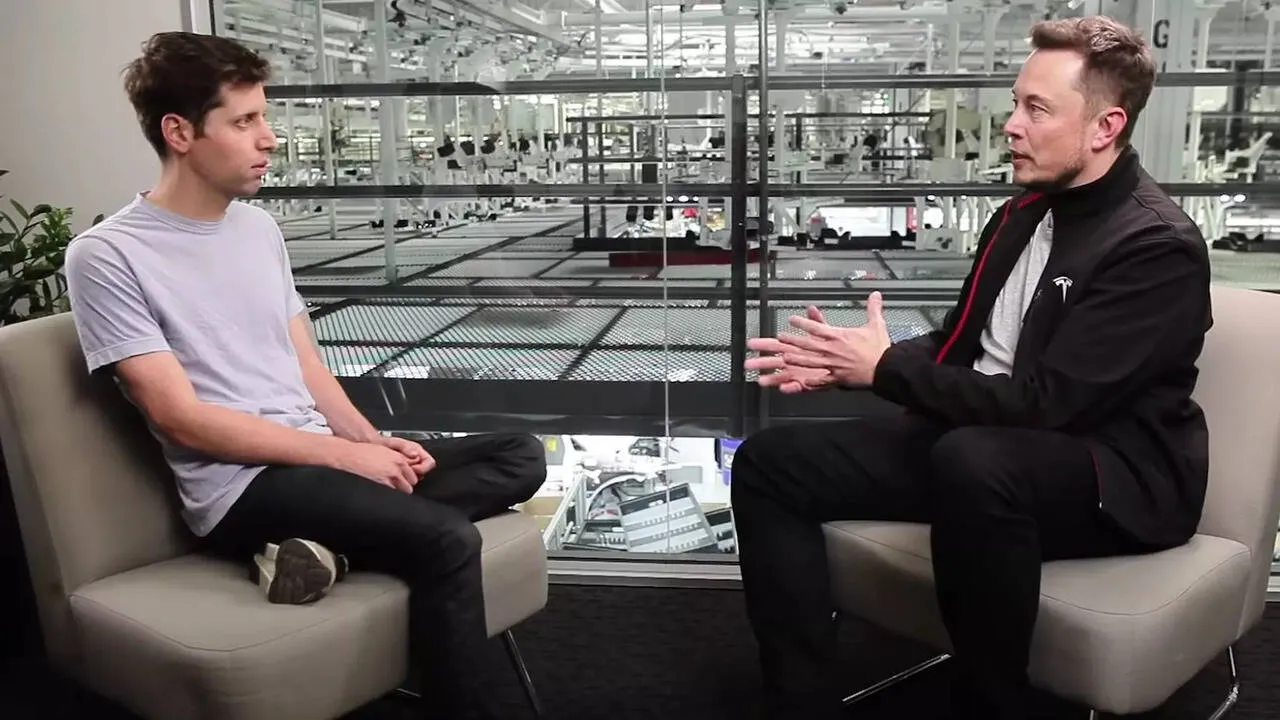
Inside Musk and Altman’s Early OpenAI Alliance
In 2015, the duo joined forces alongside several prominent tech figures to establish OpenAI, a company built around the idea of creating safe and beneficial AI for humanity. Musk brought global attention and financial backing to the project, while Altman became one of the leading voices shaping its long term vision.
At the time, both believed artificial intelligence could become either humanity’s greatest breakthrough or its biggest threat. Their shared concerns over unchecked AI development, particularly from major tech corporations, became the foundation of OpenAI’s mission. Musk frequently warned about the dangers of advanced AI, while Altman focused on building an organization that could responsibly guide the technology’s future.
In its early years, OpenAI operated as a nonprofit research lab focused on transparency and collaboration. The partnership between Musk and Altman symbolized a united push toward ethical AI development. However, as OpenAI rapidly evolved and commercial opportunities grew, differences in leadership, strategy, and control slowly began to emerge, setting the stage for one of Silicon Valley’s biggest tech rivalries.
The Artificial Intelligence Vision Behind OpenAI
OpenAI's original mission when founded in 2015 was to advance digital intelligence in the way that is most likely to benefit humanity as a whole, unconstrained by the need to generate financial return. The core goal was to build safe artificial general intelligence (AGI) and ensure its benefits are broadly and evenly distributed.
A major part of OpenAI’s early philosophy centered around transparency and safety. The company aimed to openly share research and collaborate with the broader scientific community to prevent any single organization from gaining dangerous control over advanced AI systems. Musk, in particular, repeatedly warned about the risks of unchecked artificial intelligence, calling it one of the greatest threats facing humanity if left unregulated.
OpenAI’s mission also positioned the company as an alternative to tech giants racing to dominate AI development. Instead of prioritizing competition and profits, the organization promoted the idea of building AI that would serve the public interest. However, as the technology advanced and the cost of developing large scale AI systems skyrocketed, OpenAI gradually shifted toward commercial partnerships and for profit operations, a transformation that would later become the center of Musk’s legal battle against the company.

The Rift That Sparked Silicon Valley’s Biggest AI Feud
Years after founding the company, there seemed to be multiple cracks in their partnership. They ultimately fractured over disagreements concerning corporate control, the shift from a nonprofit to a for-profit structure, and the commercialization of artificial intelligence. Various differences in thought processes such as Elon vouching for a non profit company, while Altman and the other board members were for profit. This divide didn’t make things any easier for the two and caused a rift in the company’s working dynamics and their professional relationships.
Here is a detailed look at the cracks in their relationship reveals the following key issues:
Struggles for Control: In the early days of OpenAI, Altman testified that Musk sought total control over the organization, demanding large ownership stakes and wanting to ensure decisions weren't left to others.
The For-Profit Pivot: Musk, who was a primary donor to the initial nonprofit, objected heavily when Altman and other co-founders formed a for-profit subsidiary and brought in massive investments from Microsoft. Musk alleged this violated their founding mission to keep the AGI "open" and shared.
Creation of Competing AI Entities: Following a power struggle that resulted in Musk leaving the OpenAI board in 2018, the relationship fully broke down after the release of ChatGPT. Musk eventually launched his own AI startup, xAI, which Altman later described as a "clone" of OpenAI.
Intense Courtroom Battles: Their differences culminated in landmark litigation. Musk sued Altman and OpenAI for breach of charitable trust and unjust enrichment, while OpenAI argued Musk was simply trying to seize control of the company and punish them for succeeding without him.
These escalating internal tensions ultimately led to Musk’s 2018 departure from the organizational board.
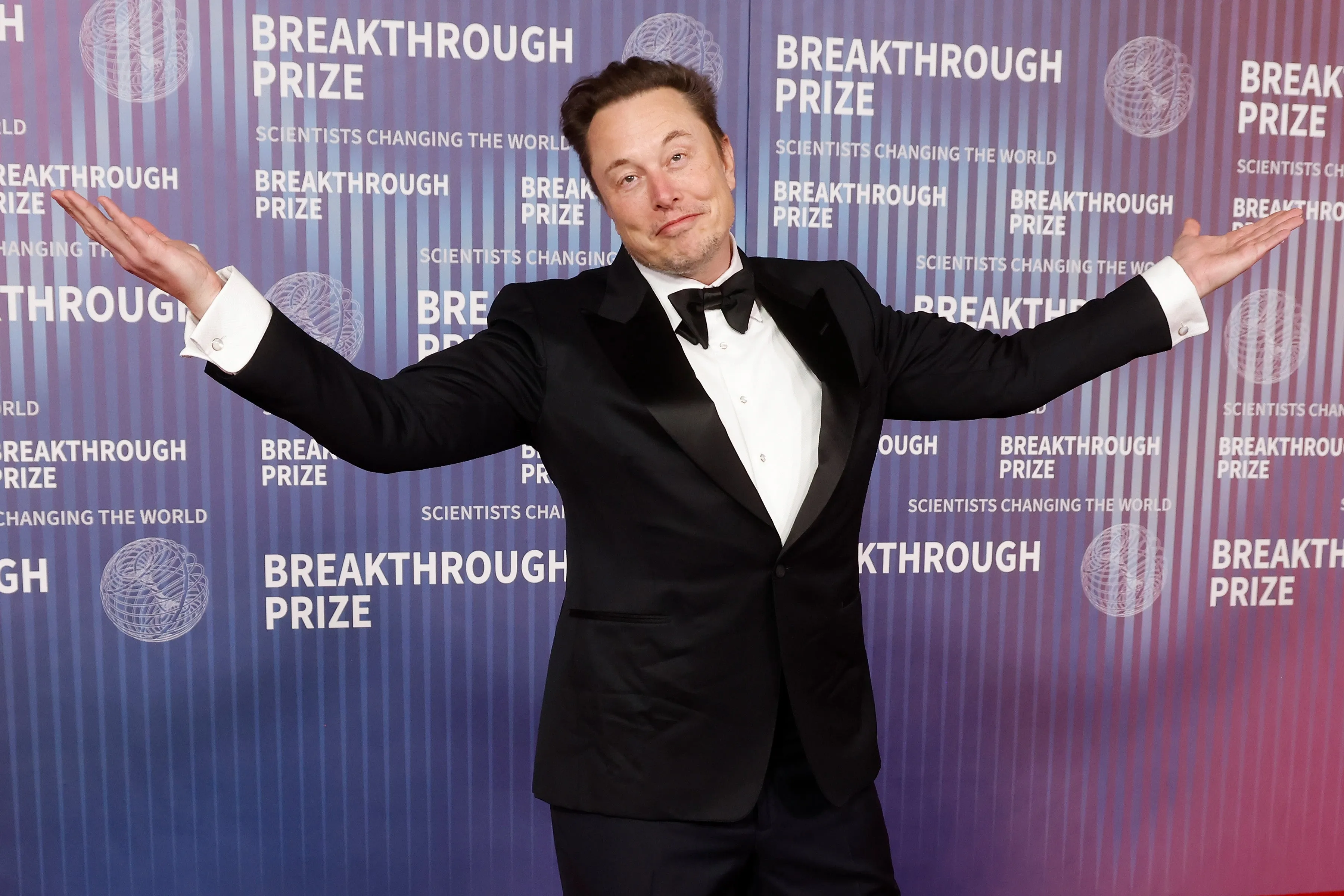
How the OpenAI Conflict Changed Big Tech AI
After Elon Musk stepped away from OpenAI’s board in 2018, the company entered a dramatically different era under the leadership of Sam Altman. What began as a nonprofit research lab focused on open artificial intelligence gradually evolved into one of the most commercially influential companies in tech.
Under Altman’s direction, OpenAI shifted toward a capped-profit structure in 2019, a move designed to attract the enormous levels of capital needed to compete in the rapidly escalating AI race. That decision opened the door for a landmark partnership with Microsoft, which went on to invest billions of dollars into the company across multiple funding rounds.
The partnership fundamentally reshaped OpenAI’s scale and ambitions. Microsoft provided vast cloud computing resources through Azure, allowing OpenAI to train increasingly powerful large language models that would have been extraordinarily expensive to develop independently. In return, Microsoft gained deep access to OpenAI’s technology, integrating tools like ChatGPT and advanced AI copilots into products such as Word, Bing, Windows, and GitHub.
This transition also marked a philosophical shift. OpenAI moved from being viewed primarily as an idealistic research organization into a commercially aggressive AI powerhouse competing directly with giants like Google, Meta, and Anthropic. The release of products like ChatGPT transformed the company into a household name and sparked a global AI arms race that reshaped the technology industry almost overnight.
Those tensions became increasingly visible in the years following Musk’s departure, especially as OpenAI’s valuation soared into the hundreds of billions and its influence over the future of AI became impossible to ignore.
The main catalyst between Elon and Altman
The lawsuit between Elon Musk and Sam Altman was mainly caused by disagreements over how OpenAI evolved after its founding.
Musk claimed that OpenAI abandoned its original nonprofit mission of building artificial intelligence for the benefit of humanity and instead transformed into a profit driven company closely tied to Microsoft. According to Musk, the organization was supposed to remain open, transparent, and focused on AI safety rather than commercial success.
The biggest point of conflict came from OpenAI creating a “capped profit” structure and receiving billions in investment from Microsoft. Musk argued this gave too much power to corporate interests and contradicted the company’s founding principles. He also criticized OpenAI for becoming increasingly secretive with its technology, especially after the rise of ChatGPT and advanced AI models.
OpenAI and Altman responded by accusing Musk of hypocrisy, arguing that he had previously pushed for greater control over the company before leaving in 2018. They also suggested the lawsuit was influenced by competition, since Musk later launched his own AI company, xAI.
What began as a disagreement over OpenAI’s direction eventually turned into a high profile legal and ideological battle over who should control the future of artificial intelligence.How the OpenAI Conflict Changed Big Tech AI

Could Musk and Altman Reconcile?
A realistic solution to the Musk and Altman conflict would likely require balancing AI innovation with stronger transparency and safety oversight.
One possible middle ground would be for OpenAI and other major AI companies to operate commercially while being monitored by independent regulatory bodies. This would allow firms to secure the massive funding needed for AI development without completely abandoning public accountability.
Greater transparency could also help ease concerns. OpenAI could publish clearer guidelines on how its AI systems are trained, governed, and monetized, while maintaining safeguards around sensitive technology. Independent audits and external ethics boards could further reassure critics like Elon Musk that AI development is being handled responsibly.
Trump’s China Visit 2026: Xi Summit, AI Talks, Taiwan Tensions and Top CEOs in Beijing
To Conclude:
In the end, the battle between Elon Musk and Sam Altman represents far more than a courtroom dispute between two tech leaders. It reflects the growing tension surrounding artificial intelligence itself, a technology powerful enough to reshape industries, economies, and everyday life across the world.
What makes the conflict so significant is that both sides believe they are protecting the future of AI in their own way. Musk continues to push the idea that unchecked artificial intelligence could become dangerous if controlled by profit driven corporations, while Altman argues that rapid innovation and large scale investment are necessary to keep progress moving forward responsibly. Their disagreement ultimately highlights the difficult balance between safety, openness, competition, and commercial growth.
The lawsuit may have ended in OpenAI’s favor, but the larger debate is far from over. Questions around regulation, transparency, corporate influence, and AI ethics continue to dominate conversations across governments and the tech industry. As companies race to build more advanced systems, the concerns raised during the Musk Altman feud are likely to become even more important in the years ahead.
By Siddhant Kohli

Stay updated with our latest news and articles. Join our newsletter!
Trending Now
No trending posts found.


